Hey there, if you’ve ever walked a construction job site and spotted a handheld, steel-tipped tool being tapped on concrete beams, columns, or slabs—chances are you’ve seen a rebound hammer in action. As a concrete testing equipment supplier, I get asked this question all the time: “What’s even the point of this thing? Can’t you just wait for concrete to cure fully and crush a test cylinder?” Short answer: Sure, you could. But if you’ve ever had a project go sideways because you couldn’t figure out why a section of concrete was too soft, or you missed a deadline because you had to wait 28 days for cylinder results, you’d be hitting that rebound hammer nonstop, too. Let’s break down what rebound hammer testing actually does, why it’s way more than just a quick tap, and how it fits into your concrete testing needs. Concrete Testing Equipment

First, let’s get the basics right—for anyone new to this, a rebound hammer (sometimes called a Schmidt hammer, though that’s a brand name that’s become super common in the industry) works on a pretty simple physics trick. There’s a spring-loaded mass inside the hammer that you cock back, press the tip hard against the concrete surface, and release. The mass bounces back when it hits the concrete, and the rebound distance is measured on a scale. The harder the concrete, the more the mass bounces back—so higher number on the scale equals higher concrete strength. Easy enough, right? But here’s where it stops being just a party trick: that rebound number isn’t just a “rough guess” at strength. It’s a non-destructive test (NDT) method, meaning you don’t have to cut a core out of a perfectly good slab or destroy a test element to get a reading. That’s a huge deal for projects where every square foot of concrete matters, or where you need to check strength at different points without causing damage.
Now, what’s the actual purpose of this test, beyond just “seeing if concrete is hard”? Let’s list the big ones, because that’s what most folks actually care about. First, real-time strength assessment. You know that wait-for-28-days test cylinders thing? Those cylinders are made in a lab, under perfect conditions—same mix, same curing, same compaction. But on a job site, maybe the concrete was poured in 90°F heat, or it rained halfway through placing, or someone messed up the water-cement ratio at the batch plant. Cylinders don’t always reflect that. With a rebound hammer, you can test the concrete 1, 3, 7, or 14 days after placement and get a rough idea of when it’ll reach enough strength for formwork removal, post-tensioning, or even loading. No more waiting around for lab results to tell you you can strip the forms. That cuts downtime and keeps projects moving.
Second, checking uniformity across a concrete structure. I’ve been on enough jobs where one column is way softer than the next, or a slab has a “soft spot” that makes you nervous. Rebound hammer tests let you map the strength of an entire section quickly—you just walk along, take 5-10 readings per square foot, and spot outliers right away. If every reading is around 4000 psi but one is 2500, you know to investigate that spot, maybe take a core to confirm, before it becomes a problem down the line. That’s way better than only testing the handful of cylinders the lab asked for.
Third, assessing existing concrete structures. Old bridges, parking garages, industrial floors—you can’t just pour a new cylinder to see how strong the original concrete is. Maybe you’re doing a renovation, or you need to inspect a structure for safety after years of use, or you’re buying a commercial building and want to confirm the concrete isn’t degraded. Rebound hammer testing lets you test in-place concrete without drilling or cutting, which saves money and doesn’t damage the existing structure. It’s the go-to first step for any structural assessment of old concrete.
But wait—before you go thinking “rebound hammer = perfect strength test,” let’s talk about its limits, because that’s part of knowing its purpose too. It’s not a replacement for lab cylinder tests or core tests. The rebound number is affected by a bunch of things that don’t have anything to do with actual concrete strength. Like, if you test the top surface of a slab that was finished with a steel trowel, that densified surface will give a higher rebound number than the same concrete tested on the side, where it was against the form. Or if the concrete has a lot of air bubbles, or if the surface is wet (even a little bit) when you test it, that will throw the reading off. Also, it works best on concrete that’s at least 28 days old? No, wait—actually, it works on older concrete too, but for newer concrete, you have to adjust for curing time. Oh, and if you’re testing high-strength concrete (like 8000 psi or higher), rebound hammers might not be accurate because the surface is too hard, and the mass can’t bounce back properly. That’s why rebound hammer testing is always paired with calibration—you have to match the rebound readings to actual core or cylinder results from the same mix, so you can get a more accurate strength number. That’s a key part of using it right, and as a supplier, we always make sure customers get the calibration info they need, not just the hammer itself.
Now, I get it—some folks in the industry are skeptical of NDT methods, especially rebound hammers. They say “why not just use cylinders?” And honestly, that’s a fair question. Let’s use a real example from a job we supplied equipment for last year. A mid-sized general contractor was building a 10-story apartment complex. They were pouring floor slabs, and the spec said they could strip formwork when the concrete reached 2500 psi. Their lab tests showed that was happening at 7 days, but they had a problem: some of the lower slabs were taking longer, and they didn’t want to wait 28 days to strip forms because that was adding $10k a week in rental costs for the formwork. They got a rebound hammer from us, and we walked them through how to test the slabs correctly—testing on the sides (not the top troweled surface), taking multiple readings per test point, calibrating with their cylinder results. Turns out, the lower slabs were soft because the batch plant had accidentally added 5 gallons extra water to those loads (the driver misread the ticket). They caught that before stripping forms, fixed the batch for the rest of the project, and saved tens of thousands in downtime and potential structural issues. If they’d only relied on the cylinder tests, they would have stripped those forms early on the lower slabs, which could have caused slabs to crack or sag. That’s the real value of rebound hammer testing—it’s a tool for quick, actionable data, not a replacement for accurate lab testing.
Another use case: precast concrete manufacturers. Precast plants pour concrete in batches, make hundreds of panels a day, and need to know when they can move the panels, stack them, or ship them. Rebound hammers let them test each panel in minutes, so they don’t have to wait for cylinders to cure before moving product. One of our precast clients was shipping panels to a warehouse project, and they used rebound hammers to confirm each panel hit 3500 psi before loading. They cut their turnaround time by 2 days per batch, which meant they could take on more projects and meet deadlines without rushing. That’s the kind of efficiency that makes NDT tools like rebound hammers worth the investment.
Let’s also talk about the basics of how to use a rebound hammer correctly, because that affects its purpose too. You can’t just tap the concrete once and call it a day. You have to hold the hammer perfectly perpendicular to the surface—if you tilt it even 10 degrees, the rebound number will be lower, which makes the concrete seem weaker than it is. You also have to test at least 5-10 points per test area, skip points that have air voids, cracks, or debris, and make sure the surface is clean and dry. We always include a quick training sheet with every rebound hammer we sell, and we offer free 30-minute Q&As for any customer who has questions about testing technique. Too many people use their rebound hammer wrong, get bad readings, and write it off as useless—but that’s not the tool’s fault, that’s user error.
Now, let’s wrap this up so it makes sense for anyone shopping for concrete testing equipment, or just curious about what rebound hammers do. The purpose of rebound hammer testing in concrete is threefold: first, to get real-time, non-destructive estimates of concrete strength during construction, so you can make decisions about formwork, loading, or repairs without waiting for 28-day lab results. Second, to check the uniformity of a concrete structure, so you can spot soft spots or inconsistencies before they turn into big problems. Third, to assess the strength of in-place concrete in existing structures, when you can’t get cylinder or core data easily. It’s not a perfect tool, it has limits (surface conditions, concrete type, testing technique all affect readings), but when used correctly, it’s one of the most valuable NDT tools in a concrete tester’s kit.
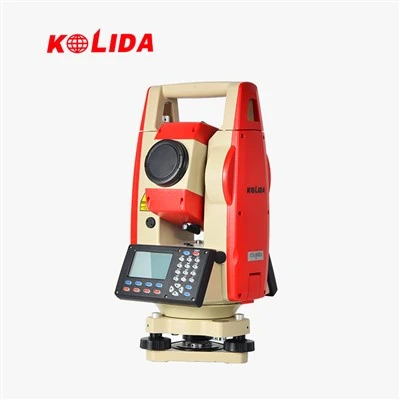
If you’re in the market for a rebound hammer, or you’re looking to upgrade your concrete testing equipment setup, don’t just go for the cheapest one on Amazon. Look for a hammer that’s calibrated, comes with a good instruction manual, and has support from a supplier who actually knows concrete testing. As someone who’s supplied this gear for years, I’ve seen too many contractors waste money on cheap rebound hammers that give wonky readings and cause more problems than they solve. We’re here to help you pick the right hammer for your needs, whether you’re a small GC working on residential projects, a precast plant cranking out panels, or a structural engineer testing old bridges.
Concrete Testing Equipment If you have questions about rebound hammer testing, want to learn more about how it fits into your concrete testing workflow, or need to gear up your job site, hit us up to connect for a purchasing discussion. We’re here to make concrete testing easier, more accurate, and less stressful for everyone.
References
- American Concrete Institute. (2019). Standard Test Method for Rebound Number of Hardened Concrete, ACI 228.1R-19.
- Malhotra, V. M., & Carino, N. J. (2004). Handbook on Non-Destructive Testing of Concrete (2nd ed.). CRC Press.
- Schmidt, E. (1951). A Concrete Testing Hammer. Beton und Stahlbetonbau, 46(1), 1-6.
Shandong Surveying Information Technology Co., Ltd.
As one of the most experienced concrete testing equipment manufacturers in China, we have world-leading production equipment and strong manufacturing capabilities. Please feel free to buy high quality concrete testing equipment for sale here from our factory. We also accept customized orders.
Address: No. 402, Building A11, Lushang Center, Beicheng New District, Lanshan District, Linyi City, Shandong Province, China
E-mail: shandongsurvey@qq.com
WebSite: https://www.nmpsurveying.com/
