If you’re reading this, chances are you’ve stumbled on Near Edge Total Thickness Operation (TTO) while troubleshooting inconsistencies in your flexible packaging—maybe you’re seeing uneven film thickness that’s messing up your seal integrity, or your finished rolls have spots that stretch too thin during converting. I’m Maya, and I’ve spent the last seven years working as a technical lead at a Near Edge TTO supplier (you can guess which one, no need to name names) helping brands, converters, and testing labs get certified on this technology. It’s not a overcomplicated process, but it’s easy to skip the small, critical steps if you’re just googling “how to get certified in Near Edge TTO” without context from someone who works with the equipment every day. Near Edge TTO

Before I break down the certification process, let’s get one thing straight: Near Edge TTO isn’t like a basic ISO course or a certification for a general lab machine. It’s a specialized testing technology that measures film thickness within 10mm of the edge of a roll—something standard ultrasound or beta gauge TTO systems can’t do, because those beam paths are too wide to pick up the tight near-edge variation that causes edge curl, seal failures, or waste at trim stations. When I first started out, I saw a lot of teams waste time on generic TTO certifications that left them unable to actually use Near Edge systems for their specific line of work, whether that’s food packaging, medical pouches, or stretch wrap. The certification I help clients with isn’t a 1-hour online quiz; it’s a mix of hands-on training, equipment calibration practice, and a final practical assessment that proves you can get reliable, reproducible data from a Near Edge TTO unit.
The first step in getting certified, and the one most people skip, is defining exactly why you need Near Edge TTO certification in the first place. I had a client last year who signed up for a certification just because a competitor had one, only to realize they needed to test 5mm edge sections for medical barrier films, but the course they took was designed for 10mm near-edge stretch wrap. To avoid that, start by mapping your use case. Are you a converter who needs to test finished rolls before shipping? A packaging brand that has incoming material specifications requiring near-edge thickness tolerances? A lab that does third-party testing for compliance? Each of these needs a slightly different certification path. For example, medical packaging requires you to document every step of your testing for FDA audits, so your certification needs to include GxP-aligned documentation, while a small food brand might only need to meet internal quality standards, so their certification can focus more on hands-on operation and less on audit trails.
Next, you need to choose a certification provider that’s actually experienced in Near Edge TTO, not just general TTO. I can’t tell you how many “certification” programs are run by people who’ve only used standard beta gauges and don’t understand the unique quirks of Near Edge technology. A good provider will be a Near Edge TTO equipment supplier (that’s us, if you’re working directly with one) or a third-party lab that has years of field experience calibrating and troubleshooting these systems. When you reach out, ask for proof of their training credentials: have they trained over 50 teams on Near Edge TTO in the last two years? Do they provide in-person or virtual hands-on access to actual Near Edge units, not just PowerPoint slides? And do they tailor the curriculum to your specific industry? That last one is non-negotiable—general TTO certifications are a dime a dozen, but Near Edge is niche enough that generic training doesn’t work.
Once you’ve lined up your provider, the actual certification process breaks down into four core parts, and I’m going to walk you through each one, because this is where most people get tripped up. The first part is foundational theory training, which takes about 4 hours for most teams. Don’t sleep on this part—even if you’ve been working with flexible packaging for years, Near Edge TTO works differently than standard TTO. Standard TTO systems measure the entire width of a film roll, averaging thickness across a beam that’s 25mm or more wide. Near Edge TTO uses a tiny, focused ultrasound beam (or a laser beam, depending on the unit) that’s calibrated to measure within 5mm of the roll edge. This means you have to understand edge effects: why static on a roll can skew readings, why the temperature of the test room affects ultrasound propagation, and how roll tension changes the near-edge thickness profile. For example, I once had a converter who thought their Near Edge unit was broken because it kept giving inconsistent readings—turns out they were testing rolls that had been sitting in a cold warehouse for 12 hours, and the cold made the film contract near the edge, so the thickness readings were off by 15%. That’s the kind of thing you only learn in good theory training, not on a help desk call.
The second part of certification is hands-on calibration practice, which is the most important part. Here’s the thing: Near Edge TTO systems are only as good as their calibration. A lot of teams will take the certification, skip calibration practice, and then get bad data because they didn’t know how to adjust the beam alignment. In calibration practice, you’ll work with two types of standards: reference films with known thickness tolerances, and edge calibration blocks that simulate the tight near-edge measurement zone. You’ll learn how to align the beam so it’s exactly positioned 1mm from the roll edge (too close, and it picks up the roll core; too far, and it’s not truly near-edge). You’ll also learn how to calibrate for environmental factors—like temperature, humidity, and static—using the tools your Near Edge unit comes with. One trick we teach in our certification is to test a reference film three times, 10 minutes apart, to make sure your calibration is stable; if the readings vary more than 0.5 microns, you need to adjust the beam, not the unit. I’ve seen teams fail the final assessment because they skipped this practice step and couldn’t get consistent calibration on test day.
The third part is practical testing, where you’ll apply what you learned to actual test samples. Depending on your certification path, this could be testing incoming rolls from a real supplier, or pre-cut film samples that simulate real-world conditions. You’ll have to complete a series of tasks: measure 10 near-edge points across three different roll sections, document the readings, identify any thickness variations that fall outside your predefined tolerance, and explain how those variations could affect your final product. For medical packaging candidates, you’ll also have to generate a test report that’s audit-ready, with timestamps, equipment serial numbers, and calibration data, because FDA auditors care about every detail. For example, last year I had a team from a snack packaging brand come through our certification, and they noticed a 1.2 micron thick spot 3mm from the edge of their test roll—something their standard TTO system had missed. That spot would have caused a seal failure on 2% of their bags, which translates to 50,000 wasted bags per run. The team passed the certification, and a month later they reached out to say they’d implemented Near Edge TTO and cut their seal failures by 90%. That’s the kind of impact certification can have, if you do it right.
The fourth and final part of certification is a written assessment, but not the multiple-choice test you’re probably used to. Our written assessment is a mix of scenario-based questions and documentation reviews. For example, we might give you a scenario where a converter is getting inconsistent Near Edge readings and ask you to walk through the troubleshooting steps, or we’ll give you a test report you generated and ask you to explain why a certain reading is or isn’t compliant. The goal isn’t to memorize facts—it’s to prove you can use Near Edge TTO to solve real problems. We also require all certified users to pass a practical follow-up check 30 days later, to make sure they’re actually using what they learned, not just cramming for the assessment.
Now, let’s talk about common mistakes people make when getting certified in Near Edge TTO. The first is assuming that certification is a one-and-done event. Near Edge TTO technology updates every two years, with new beam alignment tools, environmental compensation software, and calibration standards. Most good certification providers will give you a 1-year validity period, and require a refresher course to recertify. The second mistake is skipping hands-on practice. I can’t tell you how many people book a “virtual certification” online, watch a 2-hour video, and think they’re certified—until they show up to their first roll test and can’t align the beam properly. Near Edge TTO requires muscle memory, and you can’t get that from a screen. The third mistake is not tailoring the certification to your industry. We’ve had a lot of third-party testing labs come through our certification, and they told us that generic TTO certifications they took before didn’t teach them how to test multiple film types (LDPE, PP, PET) within the same near-edge zone, which is a requirement for their clients.
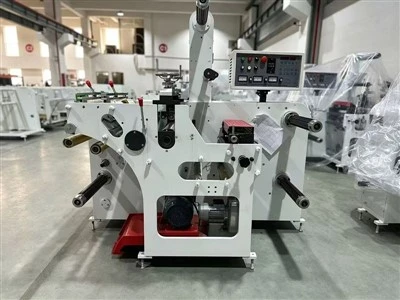
If you’re a converter, brand, or lab looking to get certified in Near Edge TTO, the last step is to reach out to a reputable Near Edge TTO supplier or third-party provider. You’ll want to ask about their certification curriculum: is it tailored to your industry? Do they provide hands-on access to equipment? What’s the validity period? Do they offer post-certification support for troubleshooting? At our company, we work with teams to customize certification paths, from 2-day in-person courses at our facility to virtual, instructor-led sessions for remote teams, and we offer ongoing support for all certified users. We also provide free 30-day trial access to our Near Edge units before certification, so you can make sure the technology is right for your operations.
Glossy White PP Don’t let the niche nature of Near Edge TTO intimidate you. Too many teams are settling for generic TTO systems that miss critical near-edge thickness variations, leading to wasted materials, seal failures, and costly recalls. Certification in Near Edge TTO isn’t just a box to check—it’s a way to improve your product quality, reduce waste, and stay competitive in a market that’s demanding more consistent packaging every day. If you’re ready to get started, reach out to our team to discuss your certification needs and how Near Edge TTO can work for your specific operations.
References
- Near Edge Total Thickness Operation (TTO) Technology: Principles and Field Applications, Journal of Flexible Packaging, 2022
- FDA Guidelines for Barrier Packaging Testing in Medical Devices, U.S. Food and Drug Administration, 2021
- Quality Control Standards for Flexible Film Converters, Association of Industrial Packaging, 2023
China Lisontec New Material Co., Ltd.
We are one of the most professional near edge tto manufacturers and suppliers in China, also support customized service. As we have world-leading production equipment and strong manufacturing capabilities, we warmly welcome you to wholesale bulk near edge tto made in China here from our factory.
Address: 8-107, Xianlin Valley, Qimin West Road Qixia, Nanjing, China
E-mail: info@lisontec.com
WebSite: https://www.lisontec.com/
