If you’ve ever stared up at a crisscrossing web of steel towers stretching over hills, highways, and small towns, you’ve probably wondered what those lanky, rickety-looking structures are really for. I’m the owner of a mid-sized electrical transmission tower supplier—we make the stuff that holds up the power lines that carry electricity from power plants to your home, and lately everyone’s been asking the same question: “What do towers have to do with this ‘smart grid’ everyone’s talking about?” I used to think they were just big, boring utility structures, too. But over the last 10 years, as we’ve upgraded old towers and built new ones for smart projects, I’ve seen firsthand how they’re the unsung backbone of the smart grid—and without them, that fancy, high-tech grid no one can stop hyping is just a bunch of empty software dreams. Electrical Transmission Tower
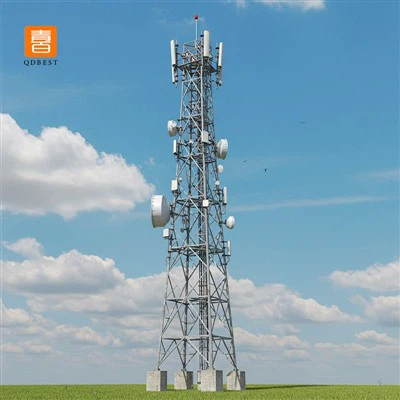
Let’s start with what the “smart grid” actually is, because I think a lot of people (including me, not long ago) get it wrong. When utility companies first built power grids, around the turn of the last century, they were basically one-way: power from a coal or nuclear plant goes straight to your light bulb, and that’s it. No two-way flow, no way to adjust if something breaks, just big, clunky, one-directional lines. The smart grid adds sensors, software, and two-way communication to that system—so your rooftop solar panel can send excess power back to the grid, your utility can text you if there’s an outage before you even notice, and wind farms in Texas can send power to Chicago when it’s windy there, instead of wasting it. But here’s the part most tech blogs skip: none of that works if the towers holding the lines are junk, outdated, or can’t handle the new stuff we’re attaching to them.
Take reliability, for example. The whole point of the smart grid is to cut down on blackouts, right? If a tree knocks down a line in Ohio, the grid can reroute power from Indiana without you even noticing. But that only works if the towers are strong enough to handle those rerouted loads. Ten years ago, we were still building towers for the old 1950s grid—they were designed to hold a single circuit of power, no extra capacity for reroutes. A lot of them were rusty, leaning, and couldn’t take the extra stress. Now, when a utility comes to us for new towers for a smart grid project, we don’t just build them to old specs. We beef up the steel, make the joints tighter, and even add extra capacity so if a line has to take on more power during an outage, the tower won’t snap. Last year, we did a project with a utility in the Pacific Northwest that was rolling out their smart grid. They had an old 1960s tower that went down during a windstorm, leaving 12,000 people without power for three days. The new towers we built for them? They have a 30% higher wind load rating, and the sensors we installed on them pick up small shifts in the steel before they become a problem. No more waiting to get a call from someone reporting a blackout—our sensors text the utility’s maintenance team the second a tower’s tilting or a joint is corroded. That’s the smart grid working, and the towers are the reason it works.
Speaking of those sensors—wait, you thought the sensors were just on power lines, right? Nope. Towers are the perfect spot for them. A tower’s steel frame is solid, so we can bolt sensors to them that monitor everything from temperature (extreme heat makes steel weak) to vibration (that could be from a loose line or a storm) to even small earthquakes, which can mess up grid lines. And since towers are spaced a few hundred feet apart, you can get a granular view of the grid’s health, not just vague data from a power plant. Our company worked on a project in the Dakotas a couple years back, where the utility was hooking up a bunch of new wind farms to the grid. Wind is intermittent—one minute it’s blowing, the next it’s not, so the grid has to adjust the load second by second. The sensors on our towers feed that wind speed data directly to the grid’s control center, so they can shift power from wind farms to gas peaker plants in minutes, no manual work needed. That’s smart, and it only happens because we put the sensors on towers that are built to handle the extra equipment, not just hold power lines.
Another big part of the smart grid is distributed energy resources—think rooftop solar, home batteries, small wind turbines, even electric vehicle (EV) chargers. For years, all power was generated in big power plants and sent long distances, but now more and more people are generating power on their roofs. That means power is flowing both ways: from the plant to your home, and from your solar panels back to the plant. The old towers can’t handle that, because they were built for one-directional power flow. When we design towers for today’s smart grid, we account for bi-directional load. That means the steel is rated for the extra current that comes when excess solar is being sent back to the grid, and the lines are spaced so they don’t arc when current is moving in two directions. Last year, a homeowner in Florida came to us (well, their utility came to us) because they had a rooftop solar system and their lines kept tripping whenever the sun was bright. The problem was the old tower near their street—its lines couldn’t handle the extra current flowing back from their panels. We replaced that tower with a model that’s rated for bi-directional loads, and the tripping stopped. That’s not just about fixing a problem—it’s the smart grid letting regular people contribute to the power supply, and towers are the gatekeepers that make that possible.
I know a lot of people look at towers and think they’re ugly, or just a necessary evil. But lately, we’re even seeing towers get smarter in ways that are invisible to most people, but super important. For example, some new towers we build have built-in wireless communication equipment, so the sensors on the lines don’t need separate cell towers to send data. That cuts down on infrastructure costs, and makes the grid more reliable because there’s no separate cell network that could go down during a storm. We’ve also started building towers with space for small weather stations, which feed data to the grid to predict when storms will hit, so utilities can prep for outages before they happen. Last winter, we had a client in the Northeast that used data from our towers’ weather stations to move crews out to high-risk lines 24 hours before a blizzard hit, instead of waiting for the storm to pass. That cut outage times by almost 40% that season.
Now, I’ll be real with you—there’s a lot of pushback about smart grids, and a lot of it has to do with towers. People don’t want more towers built in their backyards, right? No one wants a big steel structure blocking their view. But here’s the thing: upgrading existing towers and making them smarter is cheaper and easier than building new ones, and it’s how most utilities are rolling out smart grid technology right now. We’ve retrofitted thousands of old towers over the last five years, adding sensors and beefing up the steel, instead of tearing them all down. That means less new construction, less disruption to neighborhoods, and faster rollout of the smart grid.
At the end of the day, if you talk to a group of software engineers about the smart grid, they’ll probably tell you it’s all about AI, sensors, and cloud computing. And don’t get me wrong—those things are important. But go talk to a lineworker who’s been fixing power lines for 30 years, and they’ll tell you the grid only works if the towers holding the lines are solid. If a tower goes down, all that fancy software in the control center is useless. You can reroute power all you want, but if there’s nowhere to send it because a tower is broken, that’s a blackout.

That’s why my team and I don’t just sell steel structures—we’re building the backbone of the smart grid. Every tower we design, every bolt we tighten, every sensor we install is a part of making the grid more reliable, more flexible, and better for everyone. If you’re a utility company working on a smart grid project, or you’re just curious about how towers play a role in this whole thing, I’d love to chat. We’ve been in this business long enough to know that the best smart grids are the ones that work with the structures already in place, not just on top of them.
Telecommunication Tower References
U.S. Department of Energy. (2022). Smart Grid Modernization: The Role of Transmission Infrastructure.
International Council on Large Electric Systems (CIGRÉ). (2021). Transmission Tower Design for Dynamic Grid Loads.
North American Electric Reliability Corporation (NERC). (2023). Outage Root Cause Analysis: Transmission Structure Failures.
Qingdao BEST Steel Structure Co., Ltd.
Qingdao BEST Steel Structure Co., Ltd. is one of the most professional electrical transmission tower manufacturers and suppliers in China. We warmly welcome you to buy customized electrical transmission tower made in China here from our factory. If you have any enquiry about OEM service, please feel free to email us.
Address: Jiaobei Industrial Park, Qingdao, China
E-mail: sales@qdbsstower.com
WebSite: https://www.qdbsstower.com/
