If you’ve ever stood next to a diesel cargo van idling on a city street, coughing up black smoke while its engine groans under the weight of a hundred packages, you might have wondered why any logistics operator would switch to electric cargo vehicles (ECVs). The truth is, ECVs aren’t just a cleaner option—they’re built to take on the punishing daily demands of last-mile deliveries, regional hauls, and everything in between. But as an electric cargo vehicle supplier who’s worked closely with fleet managers over the past seven years, I’ve lost count of how many times I’ve gotten the same question: How long will these things actually last? Electric Cargo Vehicle

It’s a fair one. When you’re dropping $80,000 to $120,000 on a commercial ECV, you’re not buying a car to drive to the grocery store on weekends. You’re investing in a workhorse that will clock 250,000 miles, 500,000 miles, or more—all while pulling a full load, stopping and starting 10 times an hour, and enduring rain, snow, and sweltering summer heat on city streets. The answer to service life isn’t a simple number, though. It depends on a mix of engineering, usage patterns, maintenance, and even the choices you make when you first buy your vehicle. Let’s break this down, based on what we’ve seen with our own fleet models and data from years of working with operators across North America and Europe.
First, let’s talk about the big-picture baseline. Most modern ECVs designed for commercial use come with a manufacturer’s warranty that covers the battery and powertrain for 8 years or 100,000 miles—whichever comes first. But that’s not the end of their life. We’ve tracked our first-generation ECVs, which hit the market in 2017, and some of our early delivery partners have pushed those vans past 200,000 miles without major powertrain issues. One customer, a regional parcel service in Ohio, used three of our 2018 models for daily routes of 120 miles, 6 days a week, and just last year retired one after hitting 312,000 miles. The battery still held 72% of its original capacity, which is more than enough for their shorter urban routes.
Why is that possible? Let’s compare ECVs to their diesel counterparts, because that’s what most fleet managers benchmark against. A typical diesel cargo van has a service life of around 200,000 to 300,000 miles, but it requires frequent, expensive maintenance: oil changes every 5,000 to 7,000 miles, transmission flushes, brake replacements every 20,000 to 30,000 miles, and engine overhauls around 150,000 miles. ECVs, on the other hand, have far fewer moving parts. An electric motor has just a handful of components—no pistons, no valves, no exhaust systems that rust or clog. The brakes, too, are simpler; most ECVs use regenerative braking, which captures energy when you slow down, so the brake pads only need replacing every 50,000 to 70,000 miles. That lower maintenance burden is a huge part of why ECVs can stay on the road longer, if they’re cared for right.
But here’s the catch: the battery is the heart of the ECV, and it’s the part that will dictate how long the vehicle remains useful. Batteries degrade over time, a natural process where the lithium-ion cells lose their ability to hold a full charge. What does that mean in real terms? New ECV batteries will give you around 80 to 100 miles (for last-mile vans) or 200 to 250 miles (for larger regional models) of range on a full charge. Once degradation hits 80% capacity, most manufacturers consider the battery at the end of its “useful life” for long-haul routes, because you’re losing 20% of your range. But that doesn’t mean the battery is trash. It can still be used for shorter urban routes, or even repurposed for stationary energy storage—like powering a warehouse’s lighting or charging station—when it’s too weak for the road.
We’ve found that under normal operating conditions, a commercial ECV battery will reach that 80% degradation mark after 150,000 to 200,000 miles, if it’s charged and discharged properly. But “normal operating conditions” is a key phrase here. If you’re charging your ECV to 100% every single night, even when you only drive 50 miles that day, that speeds up degradation. If you leave the vehicle parked in 100-degree Florida heat for hours with the battery at 90% charge, that also adds wear. Conversely, if you charge to 80% and let it drop to 20% most days, avoid extreme temperatures, and do regular battery health checks, you can push that 80% mark to 250,000 miles or more. A customer in Seattle, for example, uses our ECVs for one-way routes up to 180 miles, and they’ve been able to keep battery degradation to just 12% after 220,000 miles by installing their own on-site chargers that slow charge overnight, rather than using fast chargers every day.
Usage patterns also play a huge role in service life. ECVs built for last-mile deliveries—smaller, more maneuverable, with lower maximum range but designed for frequent stops and starts—tend to last longer than larger regional or heavy-duty models, because they’re lighter and have less strain on the chassis and motor. We’ve also seen that ECVs used for short, consistent routes (under 100 miles a day, round trip) have lower stress on the battery and motor than those that take long highway trips. Highway driving requires the motor to work at a constant high power, which can speed up degradation, while stop-and-go city driving lets the regenerative braking system do more of the work, reducing wear on both the battery and brakes.
Maintenance, too, is just as important for ECVs as it is for diesel vehicles, even if the tasks are different. Many new ECV operators make the mistake of thinking “no oil changes means no maintenance,” but that’s not true. You still need to rotate the tires every 6,000 to 8,000 miles (heavy cargo takes a toll on tires), inspect the suspension and steering components, check the cooling system for the battery and motor (overheating is one of the biggest causes of premature battery degradation), and keep the software updated. Our service team offers free quarterly health checks for all our customers, and we’ve told them that even small issues—like a faulty cooling fan that’s not detected early—can cut battery life by 30% or more. A New York City courier service learned that the hard way; they skipped a scheduled software update on three of their 2019 models, and two of those vans had battery degradation 18% higher than the rest after just 150,000 miles.
Another factor that’s often overlooked is regulation and market demand. Many cities and countries are implementing zero-emission zones that ban diesel vehicles from their downtown areas by 2030 or 2035. That means ECVs aren’t just more durable in terms of engineering—they’re also future-proof, at least for the next decade. A diesel van bought today might become unusable in a major city in 10 years, but an ECV will still be allowed to operate. That adds to the effective service life, because you won’t have to retire it due to regulatory rules, as long as it’s still mechanically sound.
Now, let’s talk about what happens when an ECV reaches the end of its road life. A diesel van that’s hit 300,000 miles is usually worth only a few thousand dollars, if it can be fixed at all. An ECV, once the battery is too degraded for road use, still has value. As I mentioned earlier, the battery can be repurposed for stationary energy storage. The motor, chassis, and other metal components can be recycled. In fact, our company partners with a battery recycling firm that recovers 95% of the lithium, cobalt, and other materials from old ECV batteries, to be used in new ones. That circular economy means that even the most well-used ECV doesn’t go to waste, which is a big plus for logistics operators focused on sustainability.
But here’s what I want every fleet manager to take away from this: the service life of an ECV isn’t a fixed number. It’s a range, from 200,000 miles for a poorly maintained van driven on long, high-mileage highways, to 500,000 miles for a well-cared-for urban delivery van. The sweet spot for most operators is between 300,000 and 400,000 miles. We have a customer in Texas that uses our heavy-duty ECVs for cross-country freight, and they’ve pushed two vans past 380,000 miles, with the batteries still holding 75% capacity—enough for their next 100,000 miles of routes.
At the end of the day, choosing an ECV isn’t just about avoiding gas costs or meeting emissions rules. It’s about investing in a vehicle that can be a reliable workhorse for a decade or more, if you choose the right model, follow proper maintenance, and operate it in a way that doesn’t put unnecessary stress on the battery and components. As an electric cargo vehicle supplier, we don’t just sell vans—we partner with our customers to make their fleets last, by offering training on battery care, low-cost maintenance packages, and 24/7 support when something goes wrong.
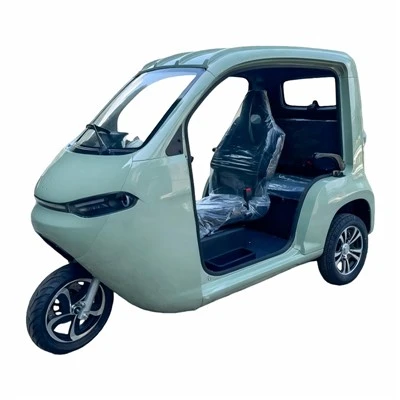
If you’re a fleet operator looking to replace your diesel cargo vehicles with electric ones, and you want to learn more about how our ECV models can fit your route needs, how to maximize their service life, and what kind of return on investment you can expect, we’d love to talk. Our team has worked with dozens of delivery companies, parcel services, and regional freight operators across the country, and we can help you find the right solution for your specific routes and usage patterns. Whether you’re looking for a small last-mile van or a heavy-duty model for longer hauls, we can provide data from our existing customers, answer your questions about battery life and maintenance, and walk you through the process of transitioning to an electric fleet.
Low-speed Electric Delivery Car References
International Energy Agency. (2022). Global Electric Vehicle Outlook.
U.S. Department of Energy. (2023). Electric Vehicle Battery Degradation and Performance.
National Renewable Energy Laboratory. (2021). Service Life Analysis of Commercial Electric Delivery Vans.
Taizhou Xiangyuan New Energy Technology Co., Ltd.
As one of the most professional flat bed pick up truck manufacturers and suppliers in China, we’re featured by quality products and low price. Please rest assured to wholesale cheap flat bed pick up truck made in China here from our factory. Contact us for customized service and pricelist.
Address: NO.7HUANGJIN ROAD,METAL RESOURCES RECYCLING INDUSTRY BASE, LUQIAO, TAIZHOU, ZHEJIANG
E-mail: order@jiajiev.com
WebSite: https://www.jiaji-ev.com/
