Hey there! I’m a supplier of Hall Flow Meters, and I often get asked this question: "Can a Hall Flow Meter be used in a dirty fluid environment?" Well, let’s dive right into it and find out. Hall Flow Meter
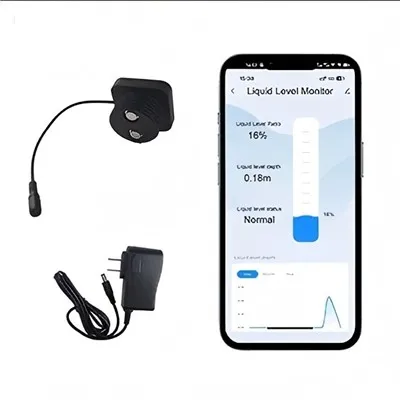
First off, let’s talk a bit about what a Hall Flow Meter is. It’s a device that measures the flow rate of fluids. It works based on the Hall effect. When a fluid flows through a pipe with a magnetic field applied, it generates a voltage that’s proportional to the flow rate. This voltage is then measured and used to calculate how fast the fluid is moving. It’s a pretty nifty technology that’s been around for a while and is used in a bunch of different industries, from manufacturing to water treatment.
Now, the big question: dirty fluid environments. Dirty fluids can be anything from wastewater with a bunch of sediment and debris to industrial slurries filled with particles. These environments are tough on any flow meter because the dirt and particles can cause all sorts of problems.
One of the main concerns is clogging. In a dirty fluid, there are often solid particles that can get stuck in the flow meter. If the passages in the Hall Flow Meter are small, these particles can build up and block the flow of the fluid. This not only messes up the flow measurement but can also damage the meter over time. For example, in a mining operation, the slurry might contain large amounts of rock fragments and minerals. If a Hall Flow Meter isn’t designed to handle these particles, it could quickly become clogged.
Another issue is wear and tear. The particles in dirty fluids can act like sandpaper on the internal components of the flow meter. As the fluid flows through, the particles rub against the walls of the meter, causing erosion. This can change the shape and size of the internal passages, which in turn affects the accuracy of the flow measurement. Over time, the meter might need to be replaced more frequently, which can be a real pain in the neck for users.
But here’s the good news. Not all hope is lost when it comes to using a Hall Flow Meter in a dirty fluid environment. There are ways to make it work.
One approach is to use a Hall Flow Meter with larger internal passages. By increasing the size of the openings through which the fluid flows, there’s less chance of particles getting stuck and causing a clog. This is especially useful in applications where the particles in the fluid are relatively large. For example, in a paper mill, the pulp slurry might contain chunks of wood fibers. A Hall Flow Meter with larger passages can handle these fibers without getting blocked.
Another option is to install a pre – filter before the flow meter. A pre – filter can trap the larger particles in the fluid before they reach the flow meter. This helps to protect the meter from clogging and wear. There are different types of pre – filters available, such as mesh filters and cartridge filters. The choice of filter depends on the size and type of particles in the fluid. For instance, if the fluid contains a lot of fine sediment, a cartridge filter might be a better option as it can capture smaller particles more effectively.
We also offer Hall Flow Meters with special coatings on the internal components. These coatings can make the surfaces more resistant to wear. For example, a ceramic coating can be very hard and durable, reducing the impact of the abrasive particles in the dirty fluid. This not only extends the life of the flow meter but also helps to maintain its accuracy over time.
In some cases, we can also customize the Hall Flow Meter for specific dirty fluid applications. We can work with the customer to understand the nature of the fluid, such as the size and concentration of the particles, and then design a meter that’s best suited for the job. This might involve adjusting the size of the internal components, choosing the right materials, or adding additional protective features.
Let’s look at some real – world examples. In a food processing plant, they might have to measure the flow of a thick sauce that contains bits of vegetables and spices. A standard Hall Flow Meter might not work well in this scenario, but with the right modifications, like a larger flow path and a pre – filter, it can accurately measure the flow rate. Another example is in a chemical plant where they deal with corrosive and dirty fluids. By using a Hall Flow Meter with a corrosion – resistant coating and proper filtration, they can ensure reliable flow measurement.
Of course, there are still some limitations. Even with all these solutions, extremely dirty fluids with a high concentration of very fine particles can still pose a challenge. In some cases, alternative flow measurement technologies might need to be considered. But for many dirty fluid applications, a well – designed and properly maintained Hall Flow Meter can do a great job.
So, if you’re thinking about using a Hall Flow Meter in a dirty fluid environment, don’t be too quick to rule it out. We’ve got the knowledge and the products to help you make it work. We’ve successfully installed Hall Flow Meters in all sorts of dirty fluid applications, and our customers have seen good results.

If you’re facing a flow measurement problem in a dirty fluid environment, why not reach out to us? We can have a chat about your specific needs, and our team of experts can recommend the best solution for you. Whether it’s a standard meter with some adjustments or a completely customized design, we’re here to help. You can get in touch with our sales team to start the conversation and see how we can meet your requirements.
Ultrasonic Flow Sensor References:
- "Flow Measurement Handbook: Industrial Designs and Applications" by Richard W. Miller
- "Fluid Mechanics and Machinery" by Rajput R. K.
- Industry whitepapers on flow measurement in dirty fluid applications
Shenzhen Fineherc Technology Co., Ltd.
As one of the most experienced hall flow meter suppliers in China, we’re featured by quality products and low price. Please feel free to buy discount hall flow meter made in China here from our factory. Welcome to view our website for more information.
Address: 5th Floor, Building D, No. 39, Keji East Road, Torch Development Zone, Zhongshan City,China
E-mail: fineherc@hotmail.com
WebSite: https://www.fineherc.com/
