Hey there! I’m in the business of supplying sizing machines, and I often get asked about the cutting mechanism of these nifty machines. So, I thought I’d take a deep dive into it and share what I know. Sizing Machine
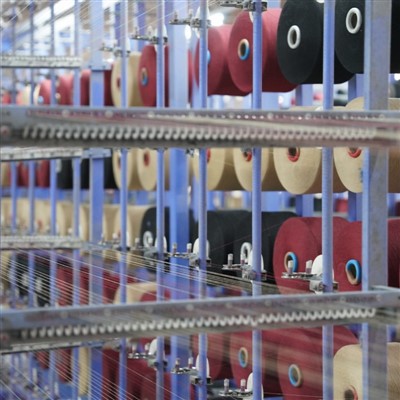
First off, let’s understand what a sizing machine is for. A sizing machine is used in various industries, mainly in textile manufacturing. Its job is to apply a protective layer, known as size, to yarns. This size makes the yarn stronger, more abrasion – resistant, and easier to handle during the weaving process. But when it comes to the cutting mechanism, it plays a crucial role in getting the right length of yarn or fabric, and ensuring the whole sizing operation runs smoothly.
There are a few different types of cutting mechanisms used in sizing machines, and each has its own pros and cons.
Knife – based cutting mechanisms
One of the most common cutting mechanisms is the knife – based system. In a knife – based cutting setup, there are usually two main types: rotary knives and straight knives.
Rotary knives
Rotary knives are like little spinning blades. They’re circular in shape and rotate at high speeds. The advantage of using rotary knives is that they can cut through materials quickly. The continuous rotation allows for a smooth and efficient cutting process. When the yarn or fabric passes through the sizing machine, the rotary knife slices through it with ease.
The way it works is pretty straightforward. The rotary knife is mounted on a shaft that’s powered by a motor. As the material moves forward, the spinning knife cuts it at the desired length. This type of cutting mechanism is great for high – speed production lines because it can keep up with the fast – moving materials. However, one drawback is that the blades can wear out over time. You have to keep an eye on the blade’s sharpness and replace it when it starts to get dull. Otherwise, the cutting quality will suffer, and you might end up with frayed or uneven edges on the yarn or fabric.
Straight knives
Straight knives are, well, straight! They’re long blades that move up and down to make the cut. These knives are often used when you need a more precise cut. For example, if you’re working with fine yarns or fabrics that require a very clean edge, a straight knife can be a better option.
The cutting action of a straight knife is controlled by a mechanical or hydraulic system. The system moves the knife in a vertical motion, and when the material reaches the right position, the knife comes down and slices through. The advantage of straight knives is that they offer more control over the cutting process. You can adjust the pressure and the speed of the knife to suit different materials. But the downside is that they’re generally slower than rotary knives. So, if you’re running a high – volume production, a straight – knife cutting mechanism might not be the most efficient choice.
Laser – based cutting mechanisms
Another cutting mechanism that’s becoming more popular in sizing machines is the laser – based system. Laser cutting uses a high – powered laser beam to melt, burn, or vaporize the material.
The big advantage of laser cutting is its precision. It can make extremely accurate cuts, even on very thin or delicate materials. You can program the laser to cut complex shapes and patterns, which is really useful if you’re in the business of making customized or intricate products.
The laser cutting process in a sizing machine starts with a computer – controlled system. The system tells the laser where to cut on the material. As the material passes through the machine, the laser beam is focused on the cutting point. The heat from the laser breaks down the molecular bonds in the material, creating a clean cut.
One of the best things about laser cutting is that it doesn’t have any physical contact with the material. This means there’s no wear and tear on a cutting blade, and you don’t have to worry about the blade getting dull. Also, the heat from the laser can seal the edges of the material as it cuts, which is great for preventing fraying, especially in textiles.
However, laser – based cutting mechanisms also have their drawbacks. They’re more expensive to set up and maintain compared to knife – based systems. The lasers require a lot of power, and you need to have proper safety measures in place because the laser beam can be dangerous.
Ultrasonic cutting mechanisms
Ultrasonic cutting is a bit of a different beast. It uses high – frequency sound waves to cut through materials. In an ultrasonic cutting mechanism for a sizing machine, an ultrasonic generator creates high – frequency electrical signals. These signals are then converted into mechanical vibrations by a transducer.
The vibrations are transferred to a cutting blade. When the blade comes into contact with the material, the high – frequency vibrations break the molecular bonds in the material, allowing for a clean cut. Ultrasonic cutting is great for materials that are difficult to cut with traditional methods, like rubber – coated fabrics or materials with high elasticity.
The advantage of ultrasonic cutting is that it produces less heat compared to laser cutting. This means there’s less damage to the material, and you’re less likely to have issues like melting or discoloration. Also, the cutting process is relatively quiet, which is a plus in a factory environment.
But just like the other cutting mechanisms, ultrasonic cutting has its limitations. The equipment is more complex and expensive. And the cutting speed might not be as fast as some of the other methods, especially for large – scale production.
Factors affecting the cutting mechanism
There are a few factors that can affect how well a cutting mechanism works in a sizing machine.
Material properties
The type of material you’re cutting is a big deal. Different materials have different physical properties, like thickness, hardness, and elasticity. For example, if you’re cutting a thick and tough fabric, you might need a more powerful cutting mechanism, like a heavy – duty knife or a laser. On the other hand, if you’re working with a delicate silk yarn, you’ll want a cutting mechanism that can provide a precise and gentle cut, like an ultrasonic or straight – knife system.
Cutting speed requirements
How fast you need to cut the material also matters. If you’re running a high – speed production line, you’ll want a cutting mechanism that can keep up. Rotary knives and lasers are generally better for high – speed cutting, while straight knives and ultrasonic cutters might be more suitable for slower, more precise operations.
Cost considerations
Cost is always a factor in any business. Knife – based cutting mechanisms are usually the most affordable option in terms of the initial investment. However, you need to factor in the cost of blade replacement and maintenance. Laser and ultrasonic cutting systems are more expensive to buy and operate, but they might be worth it if you need high – precision cuts or if you’re working with difficult materials.
Conclusion
So, there you have it! The cutting mechanism of a sizing machine can be based on knives, lasers, or ultrasonic technology. Each type has its own unique features, advantages, and disadvantages. When choosing a sizing machine for your business, it’s important to consider the type of material you’ll be working with, your cutting speed requirements, and your budget.

If you’re in the market for a sizing machine and want to learn more about which cutting mechanism would be the best fit for your needs, I’d love to chat. Whether you’re a small – scale textile producer or a large – scale manufacturer, we’ve got the knowledge and experience to help you make the right choice. Reach out to me to start a conversation about your sizing machine needs and let’s see how we can work together to improve your production process.
Beaming Machine References
- Textile Machinery Handbook: Covers general knowledge about sizing machines and their components.
- Journal of Textile Science and Technology: Contains research on different cutting technologies in textile manufacturing.
- Industrial Equipment Magazine: Offers insights into the latest trends and advancements in sizing machines and cutting mechanisms.
Jiangsu Huanqiu Jingtian Machinery Co., Ltd.
As one of the most professional sizing machine manufacturers and suppliers in China, we are able to meet the needs of the majority of our customers. Please feel free to buy high quality sizing machine made in China here from our factory. Contact us for more details.
Address: No.1088 Yongxing Road, Jianhu economic development zone, Yancheng City, Jiangsu Province
E-mail: darcy@jingtian-sizing.com
WebSite: https://www.cnhqjtjx.com/
