As a supplier of industrial robots, I often encounter the question: Can industrial robots replace human workers? This is a topic that has sparked intense debate in recent years, as the capabilities of industrial robots continue to expand and their costs decline. In this blog post, I will explore this question from multiple perspectives, drawing on my experience in the industry and the latest research findings. Industrial Robot

The Advantages of Industrial Robots
Industrial robots offer several significant advantages over human workers, which have contributed to their increasing adoption in various industries.
Precision and Consistency
One of the most notable advantages of industrial robots is their ability to perform tasks with high precision and consistency. Robots are programmed to execute repetitive tasks with exacting accuracy, eliminating the variability that can occur with human workers. This is particularly important in industries such as manufacturing, where precision is crucial for product quality. For example, in the automotive industry, robots are used to assemble components with millimeter – level accuracy, ensuring that each vehicle meets the same high – quality standards.
Speed and Efficiency
Industrial robots can work at much higher speeds than human workers. They do not require breaks, rest, or sleep, and can operate continuously 24 hours a day, 7 days a week. This allows for a significant increase in productivity. In a warehouse setting, for instance, robots can pick and pack items at a much faster rate than human workers, reducing order fulfillment times and increasing the overall throughput of the facility.
Hazardous Environments
Robots are well – suited for working in hazardous environments where human safety is at risk. They can handle tasks such as working with toxic chemicals, in high – temperature or radiation – filled areas, and in confined spaces. For example, in the nuclear power industry, robots are used to perform maintenance and inspection tasks in areas where human exposure to radiation would be dangerous.
Cost – Effectiveness
Over the long term, industrial robots can be a cost – effective solution. Although the initial investment in purchasing and installing a robot can be significant, the cost of labor over time can be much higher. Robots do not require salaries, benefits, or training, and their maintenance costs are relatively predictable. As the technology continues to develop, the cost of industrial robots is also decreasing, making them more accessible to a wider range of businesses.
Limitations of Industrial Robots
Despite their many advantages, industrial robots also have several limitations that prevent them from completely replacing human workers.
Lack of Creativity and Problem – Solving Skills
Human workers possess unique creativity and problem – solving abilities that are difficult to replicate in robots. In industries such as design, marketing, and research, human input is essential for generating new ideas, adapting to changing circumstances, and making complex decisions. For example, a graphic designer can use their creativity to come up with innovative designs, while a researcher can use their intuition and experience to solve scientific problems.
Social and Emotional Intelligence
Human workers have social and emotional intelligence, which allows them to interact effectively with customers, colleagues, and other stakeholders. In service industries such as hospitality and healthcare, the human touch is crucial for providing a high – quality experience. A nurse, for example, can provide emotional support to patients, which is an important aspect of the healing process that cannot be replaced by a robot.
Adaptability to Unstructured Environments
Most industrial robots are designed to operate in structured environments with well – defined tasks. They struggle to adapt to unstructured or changing environments. For example, in a construction site, the conditions can be highly variable, and human workers are better able to navigate these challenges and make on – the – spot adjustments.
High Initial Investment and Technical Requirements
The purchase and installation of industrial robots require a significant initial investment. In addition, businesses need to have the technical expertise to program, operate, and maintain the robots. Small and medium – sized enterprises may find it difficult to afford the upfront costs and may not have the necessary technical resources.
The Coexistence of Industrial Robots and Human Workers
Rather than a complete replacement, the future is likely to see a coexistence of industrial robots and human workers, where each plays a complementary role.
Task Allocation
In many industries, tasks can be divided between robots and human workers based on their respective strengths. Robots can be assigned to perform repetitive, precise, and dangerous tasks, while human workers can focus on tasks that require creativity, problem – solving, and social interaction. For example, in a manufacturing plant, robots can handle the assembly of components, while human workers can be responsible for quality control, product design, and customer service.
Upskilling and Reskilling
As the use of industrial robots becomes more widespread, there will be a growing need for human workers to acquire new skills. Workers can be trained to operate, program, and maintain robots, as well as to work alongside them. This upskilling and reskilling process will enable human workers to remain relevant in the workplace and take on more complex and value – added tasks.
New Job Creation
The adoption of industrial robots also has the potential to create new jobs. For example, the development, production, and maintenance of robots require a skilled workforce. In addition, as robots increase productivity and efficiency, businesses may expand, leading to the creation of new jobs in other areas such as marketing, sales, and research and development.
Conclusion
In conclusion, while industrial robots offer many advantages and are likely to play an increasingly important role in the workplace, they are not likely to completely replace human workers. The future will be characterized by a coexistence of robots and human workers, where each contributes to the overall productivity and success of businesses.
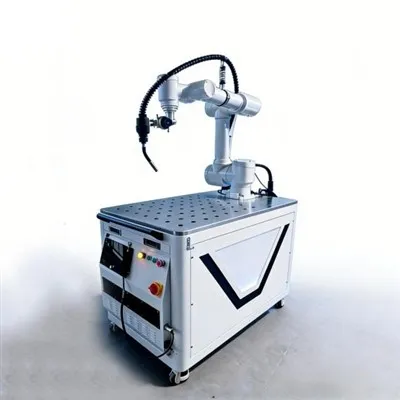
Collaborative Robot As an industrial robot supplier, I am committed to providing high – quality robots that can help businesses improve their efficiency and competitiveness. If you are interested in exploring how industrial robots can benefit your business, I encourage you to contact me for a detailed discussion. We can work together to find the best solutions that meet your specific needs and requirements.
References
- Brynjolfsson, E., & McAfee, A. (2014). The Second Machine Age: Work, Progress, and Prosperity in a Time of Brilliant Technologies. W. W. Norton & Company.
- Ford, M. (2015). Rise of the Robots: Technology and the Threat of a Jobless Future. Basic Books.
- Frey, C. B., & Osborne, M. A. (2013). The Future of Employment: How Susceptible Are Jobs to Computerisation? Oxford Martin School.
Xinweilai Intelligent Technology (Shandong) Co., Ltd.
As one of the most professional industrial robot manufacturers and suppliers in China, we’re featured by quality products and good service. Please rest assured to wholesale bulk customized industrial robot from our factory. For pricelist and quotation, contact us now.
Address: Jinghua Road, Economic and Technical Development Zone, Dezhou City, Shandong Province
E-mail: liujiqing@xinweilaiznkj.com
WebSite: https://www.xinweilaiznkj.com/
