Hey everyone! If you’ve ever been deep in the middle of picking out quartz countertops for a kitchen remodel, you’ve probably stared at a million edge profiles while scrolling through samples—from basic straight edges to fancy waterfall ones. Today, I want to break down one that’s been blowing up with our residential and commercial clients lately: the double-beveled quartz countertop edge. As someone who’s been in the quartz countertop edges game for over 8 years now, I’ve seen how the right edge can turn a good countertop into a showstopper, and this one’s got some specific perks that make it stand out from the crowd. Let’s get into it, no stuffy jargon, promise. Quartz Countertop Edges
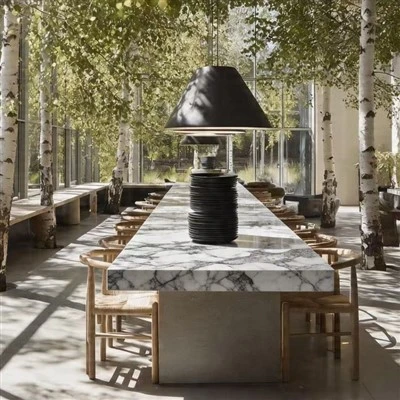
First off, let’s cut to the quick: what is a double-beveled edge, exactly? It’s not some fancy, overly complicated cut—trust me, we make these in bulk for big projects, so it’s totally manageable. Think about a basic straight (or “square”) edge: it’s just a 90-degree flat line where the top of the counter meets the side, right? A single bevel is when you cut that top corner at a 45-degree angle, so instead of a sharp, almost-pronounced corner, you get a little slant there. A double-beveled one? You do that on both the top AND bottom corner of the quartz slab’s edge. Yep, that’s it. No hidden tricks, just two neat, symmetrical 45-degree cuts on both sides of the edge.
Wait, but why go through the extra step of cutting two bevels instead of one? That’s the question we get all the time. Most of our clients don’t realize that quartz is a pretty dense material—way denser than laminate or even some granites—so that sharp square edge can be a total hazard, especially in high-traffic spots like kitchen islands. Let’s be real: how many times have you bumped your hip or elbow on a counter corner and cringed? A double-bevel fixes that softness issue twice over. Both the top and bottom corners are slanted, so there’s zero sharp point to bang into. We’ve had so many parents come to us after their kids took a tumble on a sharp edge, asking for this—game-changer for families with little ones, I’ll say that.
Another big one: style versatility. I know when you’re picking a quartz edge, you want something that works with your space, not against it. Double-beveled edges are like the Swiss Army knife of profiles. They look sleek and modern for a contemporary kitchen—pair them with a matte black quartz slab, shaker cabinets in a light gray, and suddenly your kitchen feels pulled together without trying too hard. But they don’t only work for modern spaces! We’ve installed them in farmhouse kitchens too, where clients paired them with warm white quartz and reclaimed wood cabinets—something about that subtle slant adds a touch of polish without feeling out of place in a cozy, rustic setting. It’s not as bold as a bullnose edge (which is super rounded) or as flashy as a waterfall, so it fits in pretty much every design vibe you can think of.
Let’s talk practicality too, because I don’t want to sugarcoat it—quartz edges need to hold up, especially in busy commercial spaces like cafes or office break rooms. The double-bevel’s slanted edges actually catch less dust and crumbs than a square edge, weird as that sounds. A sharp square corner has that tiny, hard-to-clean crevice where food particles get stuck, and even with regular wiping, that can build up over time if you’re not careful. The double-bevel eliminates that tiny gap, so wiping down the counter is just a little less of a hassle. Also, it’s way more scratch-resistant than a single bevel? Wait, why? Because cutting two bevels means we’re doing a secondary, precise cut on the slab, but the finished edge is thicker in the right spots, so it can handle minor impacts better than a single bevel, which is often thinner at the slanted edge. We’ve had clients in restaurants with 50+ seats come back to order 20 more slabs a year later because the edges still look like new—no chips, no dings from plates or pans getting set down.
Wait, but let’s get real about the “extra step” in fabrication—some people might think that would make it pricier, but here’s the thing: when you work with a supplier that has the right tools, it doesn’t have to be a huge markup. We use automated edge profiling machines that can do a double-bevel in the same amount of time it takes to do a single bevel, as long as you program the machine correctly. A lot of smaller, one-off fabricators might charge more because they do it by hand, but for us, it’s part of our standard inventory for most quartz slabs, so we keep costs competitive. That’s a big win for clients who want the upgrade without breaking the bank. I’ve had a homeowner who was on a tight remodel budget go with double-bevel just because it was only a $50 difference from a single bevel, and they’ve told us multiple times it was the best small upgrade they made.
Now, let’s clear up a common misconception. Some folks think a double-bevel is just two single bevels stacked, but nope—they’re perfectly symmetrical on both sides of the edge, so it looks uniform no matter which way you look at it. That symmetry is what makes it feel so clean and intentional, not like a mistake in the cut. It also works great for overhangs, if you’re doing a kitchen island with a breakfast bar. The slant on the bottom bevel keeps the bar from feeling bulky, so you don’t have that extra wide edge that makes it hard to tuck chairs under. We had a client recently with a 12-inch overhang—they tried a square edge first, and their bar stools wouldn’t fit because the square jutted out too far. Switched to double-bevel, and suddenly the stools slid right under, no issues. That’s a small detail but makes a huge difference in how functional your counter is.
What about the downsides? No product’s perfect, so I’ll be honest. If you’re going for a super dramatic, ornate look, a double-bevel might be too subtle for you. A bullnose edge gives you that soft, rounded classic vibe, and a waterfall edge is all about making a statement down the side of the island. Double-bevel is understated, so if you want your edge to be the main focal point, this isn’t it. Also, if you have a really thick quartz slab (like 3cm vs. the standard 2cm), you might have to adjust the bevel angle a little—some clients opt for a 30-degree bevel instead of 45 for thicker slabs, which still gives the same softness but doesn’t look too skinny on the big edge. Our team always checks the slab thickness first, so we don’t send a cut that looks off—we actually measure each slab before we start profiling, no generic cuts here.
Wait, let’s share a quick real example to make this concrete. Last year, we worked on a coffee shop remodel in downtown Austin. The owner wanted a quartz counter that could handle spilled lattes, constant foot traffic, and still look polished for Instagram—super important for a small business. They picked a white, speckled quartz (the kind that looks like marble but doesn’t stain) and went with double-bevel edges. A month after installation, the manager reached out saying they’ve had a few cases of iced coffee spilling on the edge, and it wiped right up—no stains, no crumbs stuck. They also said that baristas no longer keep bumping their arms on the sharp corners, which had been a little safety hazard when they were prepping drinks. That’s exactly why we love this edge—its practicality works for both residential and commercial spaces.
So, who should go for a double-beveled quartz edge? If you have kids or pets, it’s a no-brainer—soft edges mean fewer ouchies. If you’re tired of cleaning that tiny crevice on square edges, this cuts that hassle. If you want a style that works with almost any design, from modern to farmhouse, it’s a safe bet without being boring. And if you have a breakfast bar where you struggle to fit stools, the bottom bevel frees up that space.
Now, if you’re thinking about upgrading your countertops or ordering for a big project, let’s chat. We stock double-bevel profiles for most of our standard quartz slab lines, so we can get your order turned around fast, no long wait times. Our team works with both homeowners doing one kitchen remodel and contractors with 10+ property projects, so we’ve got options for every size and budget. Whether you’re not sure what edge works for your slab, or you need a bulk order for a new build, just reach out to our team to walk through the details.
Before I wrap this up, I want to mention a few quick things for anyone who’s in the planning phase. Always measure your slab thickness first—2cm vs 3cm will affect the bevel size, and our team can help you pick the right angle. Also, double-bevel edges work on all types of quartz, from solid colors to veined slabs, so you don’t have to worry about it clashing with your material. No matter what, we make sure each cut is precise, because bad cuts on quartz edges are a nightmare—chipped edges, uneven bevels, that’s not something we let leave our shop.
At the end of the day, the quartz countertop edge is way more than just a decorative detail. It’s the part you bump into 100 times a day, the part you wipe down when you spill food, the part that makes your kitchen feel complete. The double-bevel checks so many boxes: safe, easy to clean, versatile, and not overpriced. If you’ve been scrolling through edges and feeling overwhelmed, this is the one that balances form and function perfectly.
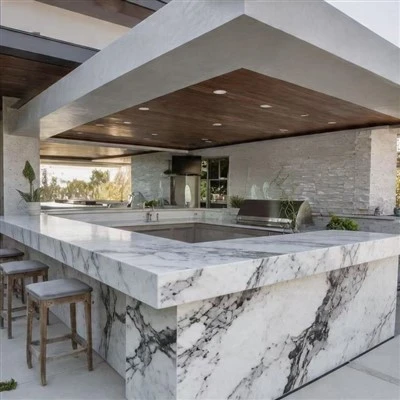
If you’re ready to get started, or even just have questions about double-beveled edges for your project, don’t hesitate to connect with our team to discuss your needs and get a custom quote. We’re here to walk you through every step, from picking the right profile to making sure your order arrives on time. Let’s make your space work for you, with an edge that’s as practical as it is nice to look at.
Quartz Countertop Edges References
- Quartz Countertop Edge Profiles: A Comprehensive Guide, National Kitchen & Bath Association (NKBA), 2022
- Material Science of Engineered Quartz, International Organization for Standardization (ISO) Standard 14565, 2020
- Residential Safety Standards for Countertop Edges, Consumer Product Safety Commission (CPSC), 2021
- Fabrication Techniques for Engineered Stone Edges, Stone Fabricators Association (SFA), 2023
Wuhu Junde New Material Technology Co., Ltd.
As one of the most experienced quartz countertop edges manufacturers and suppliers in China since 1998, we warmly welcome you to wholesale top-quality quartz countertop edges made in China here from our factory. If you have any enquiry about cooperation, please feel free to email us.
Address: No.8 Yulin Road, Xinwu Economic Development Zone, Anhui Province, China
E-mail: 1127319898@qq.com
WebSite: https://www.jundequartz.com/
