Hey everyone, it’s Jake here, the guy who’s been selling flexible plastic pipes out of my warehouse in the suburbs for the last 8 years. If you’ve ever worked with drainage systems, irrigation lines, or those little hoses that connect your fridge to the water line, you’ve probably grabbed one of my products without even knowing it. Today, I wanna cut through all the jargon and talk about something every single one of my customers (and honestly, every single person who’s ever laid a pipe) has asked me at some point: how the heck do we actually make sure these flexible plastic pipes don’t fail? Like, if you’re running a line under a slab, or wrapping it around a construction site for temporary water flow, you can’t afford a leak or a burst. So let’s break down how we test the integrity of these things—stuff I’ve learned from trial, error, and a lot of late nights troubleshooting for guys in the field. Flexible Plastic Pipe
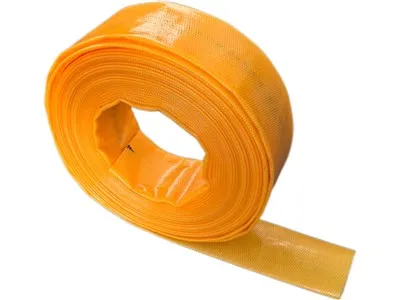
First off, let’s get real: flexible plastic pipes aren’t all the same. I work with everything from thin, lay-flat poly tubing for temporary lawn irrigation to thicker, heavy-duty PVC (well, flexible PVC) lines for underground drainage. Each type needs a different test, and if you just slap a one-size-fits-all check on ‘em, you’re gonna have a bad time. Back when I first started, I thought a quick visual check was enough—“no cracks, no kinks, let’s ship it.” Spoiler: that got me a call at 2 a.m. from a general contractor in the middle of a job who had 500 feet of burst pipe sitting under a sidewalk. Oops. That’s when I learned visual tests are just the warm-up, not the actual integrity check.
Let’s start with the basics we do in-house before any pipe even leaves our loading dock. The first big one is hydrostatic testing—most people I talk to call it a “burst test” and that’s basically what it is, but there’s a lot more to it than just pumping water until the pipe pops. Here’s how we do it, no fancy lab gear required (though we do use digital gauges now, not the old hand-cranked ones I started with): first, we cut a 3-foot section of pipe from every batch that comes in. Then we cap both ends nice and tight—no leaks at the caps, that’s critical. We fill that section completely with water, making sure there’s zero air in there (air bubbles mess with pressure readings big time—they compress, so you’ll get a false low pressure that makes you think the pipe’s fine when it’s not). Then we hook up our pressure gauge and a pump, slowly crank up the pressure step by step.
For regular irrigation pipes, we hold a pressure that’s 2x the maximum working pressure the pipe’s rated for for 10 whole minutes. If the pressure drops more than, say, 5% in that time, that’s a red flag. We’ll test that same section again, maybe longer, to make sure it’s not a fluke, and if it still fails, we flag the whole batch. For the heavy-duty stuff—like the pipes we sell for commercial drainage under parking lots—we go up to 3x working pressure and hold it for 30 minutes. Burst pressure is the final step, but we don’t do that on every single test piece (it’s wasteful, and it ruins the sample) but we do it once a month for each pipe size just to confirm our numbers are right. Last month, I had a sample burst at 870 psi—way over the 500 psi rating we advertise, and that’s exactly the kind of data I need to feel confident sending it out to a customer.
Wait, but what if the pipe’s gonna be used for something that’s not water? Like, a guy uses our line to pump chemicals for a farm, or HVAC refrigerant lines? Hydrotesting with water doesn’t cut it there, right? So we do a version of that called pneumatic testing. Instead of water, we use compressed air or inert gas (like nitrogen, no oxygen to mess with the pipe material). Again, cap both ends, purge all moisture out of the pipe, crank up the pressure to 1.5x working pressure, hold it for 5 minutes. It’s not as forgiving as hydro—if a pipe fails pneumatic, it’ll blow apart faster, but for lines that carry gas or chemicals, it’s way more accurate. We had a client last year who was using our pipe to transport a mild agricultural chemical; hydrotesting left a tiny pinhole that didn’t show up, but pneumatic caught it immediately. Turned out the chemical was eating at a weak spot in the wall that water didn’t affect, so we adjusted our specs a little for that pipe’s chemical resistance and fixed the issue.
Next up, I don’t see this talked about as much, but it’s one of the most common failure points: kink resistance testing. Flexible pipes are flexible for a reason—they’re supposed to bend around corners, go around tree roots, snake through crawl spaces. But if they kink too sharp, that’s a leak waiting to happen, or even a total blockage. How do we test that? We take a 10-foot section of pipe, mark a point at 2 feet from one end, bend it into a U-shape so that marked point is touching itself (that’s a super sharp bend, way sharper than anyone would ever do in real life), and we hold that bend under a continuous flow of water (or air, depending on the use) for 24 hours. If there’s a drop in flow, or a leak, that’s a fail. Also, we pull that bent section straight and check for cracks or permanent creases. Last winter, we had a batch of thin lay-flat tubing that passed pressure tests but failed kink test—turns out the manufacturer used a thinner wall material for a low-cost run, and those sharp bends would crease and split. We pulled the entire batch before it left our warehouse, saved our customer a ton of headaches, and lost a little cash on the return, but I’d rather do that than get a bad review.
Then there’s what I call the “real world torture test,” and honestly, this is the one that makes me the most confident in our products because it’s not lab-controlled. We set up test plots in our backyard (don’t laugh, I’ve got a whole section fenced off for this) and bury 50-foot sections of our different pipe types underground, just like a customer would for a lawn irrigation system. We leave some in there for 6 months, a year, even 2 years, checking in every month to see if there’s any leaks, brittleness, or softening from soil chemicals, sun exposure (wait, hold on—sun damage is a huge one I almost forgot! If a pipe’s gonna be exposed above ground for any length of time, UV rays will break down the plastic, make it brittle, and cause cracks. So we also do accelerated UV testing in our little “sun chamber” (it’s just a big old tent with UV bulbs we run 24/7). We hang pipe sections in there for 10 days, which simulates about 5 years of outdoor sun exposure. If they crack after that, we add more UV stabilizer to the plastic mix.
Last year, we had a client who was hanging our pipe along a fence line for temporary garden watering, and after a few months, it got all crumbly and split. That’s because the pipe we had them was rated for underground use, but it didn’t have enough UV stabilizer. We adjusted our UV rating and now we clearly label every pipe with where it can and can’t be used—no more confusion there. That’s the kind of stuff you only learn when you test in real conditions, not just a lab.
Wait, what about joints? So many people only test the pipe itself and forget the fittings and joints that connect the pipe to whatever it’s attached to. That’s a huge mistake. A pipe could be perfect, but a bad joint will leak faster than anything. We test joints by making a complete assembly—pipe plus whatever fitting the customer would use (threaded, barbed, whatever), and we run it through the same pressure tests as the pipe. But we also do a pull test: we pull the joint at a 45-degree angle with a lot of force (way more than it would ever get from water pressure or ground movement) to make sure it doesn’t pull apart. We even expose joints to temperature extremes—we put them in a freezer at -20°F for 24 hours, then heat them up to 140°F for another 24, then test pressure. If the joint holds through that, it’ll hold through anything the field throws at it.
I know a lot of other suppliers cut corners on this, especially the ones who sell online cheap—they just do a quick pressure test on a sample and call it good. But for me, my business is built on repeat customers. If a contractor can trust my pipe to not burst during a big job, they’ll call me for every subsequent job. So all these tests aren’t just “quality control”—they’re how I keep my word.
Let me wrap this up with a quick tip for anyone working with flexible plastic pipes, whether you’re a pro or a DIYer. Don’t skip the testing step yourself when you get the pipe! Do a quick hydro test if you can—fill the line with water, cap the ends, let it sit for an hour, and check for leaks. If the pressure drops, there’s a problem. Also, don’t bend the pipe sharper than it’s rated for—just because it’s flexible doesn’t mean it can bend into a circle without breaking.
At the end of the day, integrity testing isn’t just a process—it’s the reason I’ve been in this business for 8 years and haven’t had a single major failure that wasn’t caught before shipping. If you’re in the market for flexible plastic pipes—whether it’s for irrigation, drainage, whatever your project is—hit me up to chat. I can walk you through exactly what we test for that specific use, answer all your questions, and make sure you get the right pipe for the job.
References
PVC Suction Hose ASTM D1598 Standard Test Method for Time-Rupture Characteristics of Plastic Pipe, Tubing, and Fittings Under Pressure
ASTM D2122 Standard Test Method for Determining the Ultimate Tensile Strength of Plastics
ISO 9967:2014 Pneumatic tests for polyethylene (PE) pipes and fittings
Weifang Xinzhiyuan Plastic Co., Ltd.
As one of the most experienced flexible plastic pipe manufacturers and suppliers in China, we offer a wide range of products with superior quality. Please feel free to wholesale premium flexible plastic pipe made in China here from our factory. We also accept customized orders.
Address: No. 700, Tongle Street, Economic Development Zone, Changle County, Weifang City, Shandong Province
E-mail: hua@xzypvchose.com
WebSite: https://www.pvchose-xzy.com/
