If you’ve ever spent 8+ hours a day perched at a desk—whether coding, designing, or pouring over spreadsheets—you’ve probably stared at your office chair at some point and thought, “This doesn’t fit me.” Maybe the lumbar support digs into the wrong spot, the armrests are too narrow for your wide shoulders, or the seat is too shallow for your long legs. For years, mesh office chairs were written off as one-size-fits-all, off-the-shelf pieces that worked for most people but never quite for you. As a mesh office chair supplier who’s fielded this exact question from thousands of customers over the past seven years, I’m here to set the record straight: yes, a mesh office chair can absolutely be customized. But it’s not the same as painting a mug or ordering a custom t-shirt. It requires balancing material science, ergonomic research, and real-world use cases to make something that’s not just tailored to your body, but durable, supportive, and worth the investment. Mesh Office Chair
Let me start with a quick dose of reality: not all customization is equal. When I first launched our small chair factory in 2017, I thought adding a few color swaps and optional lumbar pillows counted as customization. I was wrong. A customer in the healthcare space reached out after ordering 500 of our standard chairs, complaining that the fixed lumbar support was too high for nurses who spent half their shifts bending over hospital beds and reaching for supplies. The standard lumbar position, calibrated for the average 5’8” adult, wasn’t just uncomfortable—it was contributing to mild lower back pain, which was already a top complaint among healthcare workers who sit (and bend) for hours. That experience taught me that meaningful customization isn’t just cosmetic; it’s functional, and it has to be rooted in data about how different users move.
Today, we offer three tiers of customization, designed to meet needs ranging from individual remote workers to enterprise teams of 1,000+ people, and each tier solves a specific problem. Let’s break them down, starting with the most accessible and moving to the fully bespoke options.
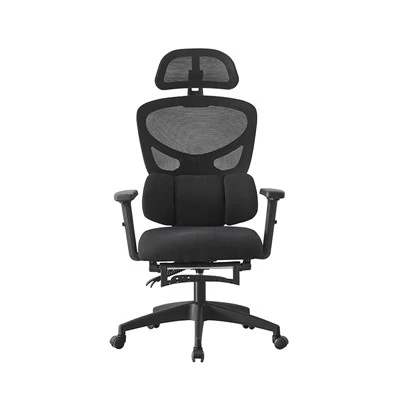
First, there’s modular part customization, the entry point that works for almost any user or business. This is what we offer to most small businesses and remote workers who don’t need a full custom design but want to tweak parts that make the biggest difference in comfort. For mesh chairs, the modular parts that most people customize are armrests, seat depth, lumbar support, and color. Wait—you might be thinking, “Seat depth? Isn’t that fixed?” No, not when you work with the right supplier. Our standard chairs come with a seat depth adjuster that can go from 18 inches to 21 inches, but for users who are 6’4” or 5’0”, that range is too narrow. For a customer who’s a full-time remote worker and 6’6”, we can extend that range to 24 inches, so when they sit all the way back in the chair, their knees have 2–3 inches of clearance from the front edge of the seat (a key ergonomic rule to avoid pressure on the back of the legs). For a short-stature admin assistant who only sits 16 inches back from their desk, we can shrink the seat depth to 15 inches, so they don’t feel like they’re sitting at the edge of the chair.
Armrests are another huge modular win. Most standard mesh chair armrests are fixed in height and width, which works for average body types, but if you have broad shoulders or use a desk with a narrow surface, those armrests can cramp your posture. We offer four armrest types as standard, but for custom orders, we can add 2 inches of width, adjust the height range from 4 inches to 8 inches (instead of the standard 6 inches), or even swap in 3D armrests that move up, down, forward, backward, and rotate, for users who switch between typing, writing on a tablet, and taking calls while leaning on their elbows. We also recently added a soft, memory foam armrest pad for users who have carpal tunnel or spend a lot of time resting their wrists on the armrests during long editing sessions.
Lumbar support is the third big modular part, and this is where our healthcare customer example comes full circle. Standard lumbar supports are molded plastic or foam sewn into the mesh, set at 6 inches from the base of the seat. For nurses, teachers, or delivery drivers who sit and bend for hours, we can lower that lumbar support by 2 inches, raise it by 1 inch for people who need extra support higher up (like those with mild scoliosis), or even add a removable, adjustable lumbar pillow that slides up and down the back frame. For people who prefer no lumbar support at all (a smaller group, but we hear from them!), we can even omit the lumbar piece entirely, as long as the chair’s frame is still rigid enough to support the spine without it.
The second tier of customization is material and performance customization, which is where mesh chairs get their biggest edge over fabric or leather chairs. Mesh is inherently flexible, which means it can be tailored to specific needs that fabric can’t match. Most people don’t realize that not all mesh is created equal—there are dozens of mesh types, each with different tension, breathability, and durability. Standard mesh is 100% polyester, with a tension calibrated for average weight and use. But for users who weigh 250+ pounds, that standard mesh will stretch out within a year, leading to sagging and lost support. For users who live in hot climates (or work in a space with poor AC), standard mesh can feel too warm, trapping heat against the back. For users who work in dusty workshops or industrial spaces, standard mesh can collect dust and debris in its pores, making it hard to clean.
That’s where custom mesh comes in. We can swap standard polyester mesh for a high-tension, reinforced nylon mesh that has a 350-pound weight capacity, instead of the standard 200 pounds. We can use a perforated polyester mesh that’s 30% more breathable, with tiny holes that let air circulate 2x faster than standard mesh, perfect for users in Phoenix or Miami. We can even use antimicrobial mesh, treated with silver ions that kill 99.9% of bacteria, for healthcare, hospitality, or school environments where cleanliness is a top priority. A client of ours at a national coffee chain ordered 200 chairs with antimicrobial mesh for their baristas, who spend 10-hour shifts on their feet and sit between customer orders—they reported a 40% drop in reported back pain in the first quarter, and zero complaints about mold or mildew on the chairs, which was a common issue with their old leather seating.
We also customize the frame and base for performance needs. Standard mesh chair frames are made of medium-density plastic, with a five-pronged base for wheeled casters. For enterprise teams that move chairs between rooms or have high turnover, we can upgrade the frame to high-density engineering plastic that’s 2x more impact-resistant, or even a lightweight aluminum frame for users who need to move chairs frequently (like event planners or teachers). For users who prefer a stationary chair (no wheels), we can replace the wheeled base with a fixed four-pronged base, which is more stable for users who type with force or use a standing desk converter that requires a steady chair.
The third and final tier is fully bespoke customization, reserved for individual users or large organizations with very specific needs. This is where we work one-on-one with each customer to design a chair that fits their unique body, workflow, or brand. For an individual user, that might mean taking measurements of their torso length, hip width, and leg length to calibrate every part of the chair—from the exact curve of the lumbar support to the width of the seat to the height of the backrest—to within a quarter-inch of their body. For a brand, that might mean adding their logo to the back of the chair, using their company’s exact color palette for the mesh and armrest pads, or even designing a tilt mechanism that works with their office’s standing desk system, so the chair tilts forward when the desk is raised to standing height.
I want to be clear here: bespoke customization isn’t for everyone. It costs 2–3 times more than a standard chair, and it has a lead time of 6–8 weeks, compared to 1–2 weeks for modular orders. But for the right customer, it’s life-changing. A freelance graphic designer in Chicago reached out to us two years ago, after struggling with back pain that made her miss deadlines and turn down high-paying projects. She had a rare condition that made her hip width 2 inches larger than average, and a torso length that was 4 inches shorter than standard. We worked with her for three weeks, taking measurements, testing prototypes, and adjusting every part of the chair until she said, “I haven’t felt this comfortable sitting in years.” She’s since ordered 12 chairs for her team, all bespoke, and she refers at least 10 customers a year to us.
Now, I get what you’re thinking: why is this a big deal? Why not just buy a standard chair and adjust it with a pillow or a footrest? The short answer is that customizing a chair that fits your body correctly addresses the root causes of discomfort, not just the symptoms. A footrest fixes leg pressure, but it doesn’t fix a lumbar support that’s too high. A pillow fixes a flat back, but it doesn’t fix a seat depth that’s too short for your legs. For people who spend 8+ hours a day sitting at a desk, small adjustments make a huge difference over time. The Occupational Safety and Health Administration (OSHA) reports that musculoskeletal disorders related to poor office chairs cost U.S. businesses $15–20 billion a year in lost productivity and workers’ compensation claims. That’s a staggering number, and it’s almost entirely preventable with chairs that fit the user, not the other way around.
I also want to address a common misconception: custom mesh chairs are more flimsy than standard ones. That’s only true if you work with a supplier that cuts corners. At our factory, we test every custom order for durability—we sit in each chair for 24 continuous hours, run tilt tests 10,000 times (the industry standard is 5,000 times), and weight-test frames up to 500 pounds. We don’t cut corners on materials, because we’ve learned that a chair that breaks in a year is a waste of money, even if it’s cheaper upfront.
If you’re reading this, wondering if a mesh office chair can work for you, the short answer is: yes, and we can help. Whether you’re a remote worker who needs a chair that fits your 6’5” frame, a small business that wants chairs in your brand colors, or a large enterprise that needs custom lumbar support for your entire team, we have options that work. We don’t do generic one-size-fits-all chairs anymore—after that first experience with the healthcare nurses, we realized that the best chairs are the ones that fit the person, not the other way around.
If you’re ready to stop settling for a chair that doesn’t work for you or your team, and want to learn more about customizing your mesh office chair, reach out to us to discuss your needs, share your measurements, or ask any questions you have. We’re here to help you build a chair that keeps you comfortable, productive, and pain-free for years to come.
Visitor Office Chair References
- Occupational Safety and Health Administration. (2022). Musculoskeletal Disorders (MSDs) in the Workplace: Office Ergonomics. U.S. Department of Labor.
- American College of Sports Medicine. (2021). Ergonomic Guidelines for Office Seating and Workplace Productivity. ACSM’s Health & Fitness Journal.
- International Organization for Standardization. (2019). Ergonomics of the Physical Environment: Office Chairs (ISO 9241-5). ISO Press.
- Journal of Occupational and Environmental Hygiene. (2020). Mesh Seating Performance: Pressure Distribution and Discomfort Ratings in Prolonged Sitting. Taylor & Francis.
Bazhou Handsome Furniture Co., Ltd.
Bazhou Handsome Furniture Co., Ltd. is one of the most professional mesh office chair manufacturers and suppliers in China, featured by quality products and good price. Please rest assured to buy bulk mesh office chair made in China here and get pricelist from our factory. Customized orders are welcome.
Address: NANLIU VILLIAGE ,BAZHOU CITY,HEBEI PROVINCE,CHINA
E-mail: Handsome01@handsomechair.com
WebSite: https://www.handsome-chair.com/
