If you’ve ever stared at a reverse osmosis (RO) system’s thin, membrane-wrapped cartridge and wondered exactly what it’s keeping out of your water, you’re not alone. As someone who’s worked in the reverse osmosis water system supply business for over a decade, the most common question I hear from homeowners, café owners, and even small restaurant managers is this: “Does this thing actually get rid of viruses?” I get it—when you’re worried about tap water safety, you don’t just want vague claims about “clean water”; you want hard, proven facts. No marketing fluff, no overpromises, just the straight stuff I’ve learned from testing systems, talking to water chemists, and troubleshooting installations for thousands of customers. Reverse Osmosis Water System
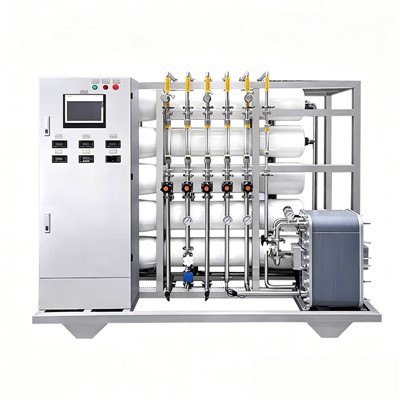
Let’s start with the basics, because a lot of the confusion here comes from mixing up what different water treatment processes do. Tap water, right now, in most places in the U.S. is treated with chlorine, which kills a lot of harmful germs. But chlorine doesn’t get rid of every bad thing—some viruses are tiny enough to slip through, especially if water sits in old pipes for a while, or if the treatment plant’s chlorine levels drop because of a main break. Viruses are smaller than bacteria, way smaller: a typical norovirus is around 27 to 32 nanometers (nm) across, and rotavirus, another common one, is about 70 nm. Bacteria, for comparison, are usually 1,000 nm or bigger. So when people ask if RO catches viruses, the first thing to look at is how small the RO membrane’s holes are.
Good-quality RO membranes have pores that are usually between 0.1 and 1 nm in size. That’s like putting a window screen with holes the size of a pinhead next to a screen with holes the size of a grain of sand—nothing bigger than a single atom can get through, basically. Viruses? Even the smallest ones are 27 times bigger than the largest pore on an RO membrane. But wait, I’ve heard people argue that membrane size isn’t the only thing that matters. There’s something called “adsorption” too—charges on the membrane and charges on the virus. Most viruses have a slight negative charge, and our RO membranes are engineered with a negative charge as well, so that repels the virus further, not just blocks it physically. That’s a key point a lot of budget RO systems skip. The cheap ones use old membranes with inconsistent pore sizes, so some of those tiny holes might be just a little too big, or the charge is off, so they don’t catch as much.
I remember a few years back, we got a call from a small café in a rural part of Ohio. They were getting their water from a well that the county tested and found had low levels of coliphage, a virus that’s often used as a stand-in for human viruses. The café owner tried a cheap under-sink system from a big-box store, and the tests kept coming back positive. They reached out to us, and we installed our mid-tier commercial RO system, with a certified membrane that’s tested to remove 99.99% of viruses. A month later, their retest was clear. That’s the kind of result that sticks with me, because it’s not just lab data—it’s a real business that could’ve been shut down if their water wasn’t safe for lattes and drip coffee.
But let’s not act like RO is a silver bullet. There are limits, and that’s something I always make sure to tell every customer. First, RO systems don’t do anything to kill viruses that are already in the system, like if the water line going into your RO gets contaminated after it’s been filtered. The membrane only blocks stuff that’s in the water when it hits the membrane. Second, RO systems only work if they’re maintained properly. I’ve seen customers buy a cheap RO, install it themselves, and never change the pre-filters or the membrane. After a year, those pre-filters are clogged with sediment, so water pressure drops, and the membrane gets fouled, so pores get bigger or the charge breaks down. Last year, a customer in Detroit told us their RO was “not working” because they’d gone two years without changing anything, and when we tested their output, we found coliform bacteria, which had grown in the clogged pre-filter and then snuck through to the membrane. We replaced all the filters and recalibrated the system, and it was back to full virus removal, but that’s a mistake anyone can make if they don’t know how the system works.
Another common misconception: a lot of people think all RO systems are the same. That’s where my job comes in, because as a supplier, I don’t just sell a box with a membrane and a few filters. We test every batch of membranes we get, we provide maintenance guides that are actually easy to follow, and we offer technical support for anyone who’s not sure how often to change filters. The NSF (National Sanitation Foundation) has standards for water treatment systems, right? NSF/ANSI Standard 58 is the one for RO systems, and it specifically includes requirements for pathogen reduction. A system that’s NSF 58 certified for virus removal has to be tested to remove at least 99.99% of viruses, which is exactly the level most health departments recommend for drinking water. A lot of no-name RO systems you find online aren’t certified at all—they might have the same membrane printed on the box, but it’s a cheap, untested one that doesn’t meet that standard.
I’ve also talked to a few water quality researchers over the years, and they’ve told me that RO is actually one of the most reliable methods for virus removal for point-of-use (POU) systems, better than ultraviolet (UV) light for some situations. Wait, why? Because UV works by zapping viruses’ DNA so they can’t replicate, but it only works if every drop of water gets hit by the UV light. If your RO system has a tiny air bubble or a piece of sediment that blocks the UV bulb, or if you put the bulb too far from the water line, there’s a chance some viruses get missed. RO is physical and electrostatic blockage—there’s no way around it, if the virus is bigger than the pore or has the same charge, it can’t get through, no matter how the water flows. Of course, combining RO with a UV filter is a good extra step, but RO alone is already really effective.
Let’s get real about the stuff that doesn’t get removed by RO, too, because that’s part of being honest. RO removes bacteria, viruses, cysts like giardia and cryptosporidium, heavy metals like lead and arsenic, and even most chemicals like pesticides and volatile organic compounds (VOCs). But it does remove some beneficial minerals, like calcium and magnesium, which is why some people say RO water tastes “flat.” That’s a feature and a flaw, depending on what you want. If you’re worried about viruses and heavy metals in your tap water, that tradeoff is worth it for a lot of people. If you want water that still has minerals for taste, you can add a remineralization filter, which is a simple cartridge that adds those minerals back in without affecting the virus removal.
I’ve had customers who were on the fence about buying an RO system because they thought it was too complicated, or that it would waste too much water. That’s another myth I work to correct. Modern RO systems have come a long way from the ones installed in homes in the 90s, which would waste three or four gallons of water for every one gallon of filtered water. The systems we supply now have a water recycling system that cuts waste by up to 75%, so for every gallon of filtered water, you’re only wasting a gallon or a little more. That’s a big difference, and it makes RO systems much more affordable to run for most households.
Back to the original question: Can a reverse osmosis water system remove viruses? The short answer is yes, but only if it’s a properly installed, NSF 58 certified system, maintained on a regular schedule, and using good-quality membranes. The long answer, which is what I spend time explaining to every customer, is that it’s not a set-it-and-forget-it device, but it’s one of the most reliable point-of-use treatments for virus removal available today. I’ve seen it work for small businesses, for families with young kids who are more vulnerable to waterborne illnesses, for people who live in areas with older, corroded pipes that might let contaminants into the water.
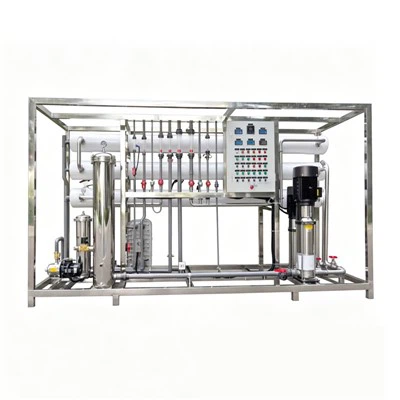
If you’re someone who’s considering an RO system for your home or business, and you want to know if it will meet your water safety needs, feel free to reach out to our team to discuss your requirements. We can help you figure out which system is right for your water source, answer any questions you have about maintenance, and make sure you have all the information you need to make the right choice for your family or your operations. Trust me, after 10 years in this business, I’d never sell a system I wouldn’t use in my own home, and that’s the standard we hold to for every customer we work with.
Deionized Water System References
CDC. (2023). Water Treatment and Disinfection for Community Water Supplies. Centers for Disease Control and Prevention.
NSF International. (2021). NSF/ANSI Standard 58: Reverse Osmosis Drinking Water Treatment Systems. NSF International.
World Health Organization. (2022). Viruses in Drinking Water: Occurrence, Methods of Detection, and Control. World Health Organization.
American Water Works Association. (2020). Reverse Osmosis and Nanofilysis Principles and Applications. American Water Works Association.
Shandong Yanuo Environmental Protection Equipment Co., Ltd.
We’re well-known as one of the leading reverse osmosis water system manufacturers and suppliers in China, featured by quality products and good price. Please rest assured to buy bulk reverse osmosis water system made in China here from our factory. Customized orders are welcome.
Address: North Side of the Road, 1,000 Meters West of the Intersection of Fenghuangshan West Road and Provincial Highway S102, Wangfu Subdistrict, Qingzhou City, Weifang City, Shandong Province.
E-mail: ynhb.499973983@gmail.com
WebSite: https://www.zkyaruo.com/
