If you’ve ever flipped on a light switch in the dead of night, charged an electric vehicle during a rainstorm, or warmed your home on a frigid winter evening, you’ve relied on a system that rarely works exactly as planned. The energy sector is a finely tuned balancing act: supply has to meet demand in real time, equipment like gas turbines and wind farms need to run efficiently without breaking, and regulators have to keep operations safe and sustainable. For the past 12 years, as someone running an industrial model supplier focused on this exact space, I’ve watched how these systems go from chaotic to manageable—all thanks to industrial models, the quiet workhorses powering nearly every decision energy teams make today. Industrial Model

Let’s start with what these models actually are, because it’s easy to mix them up with the simple spreadsheets many energy teams used 20 years ago. An industrial model for energy isn’t just a list of numbers or a static chart. It’s a dynamic, code-built framework that incorporates every variable of a real-world energy operation: the physical properties of a gas pipeline, the weather patterns that affect a wind farm’s output, the wear and tear on a coal plant’s boiler, even the hourly fluctuations in consumer demand across a city or region. When we build these models for clients, we feed in decades of operational data, real-time sensor feeds, and industry-specific regulations, turning guesswork into actionable, data-backed decisions.
Take one of our first big clients, a mid-sized utility based in the Midwest that struggled with peak demand in the summer of 2018. Back then, their approach was reactive: when the temperature hit 95 degrees and everyone turned on their AC, they’d scramble to fire up backup gas plants, which often ran inefficiently and drove up costs and emissions. We built them a demand response model that integrated local weather forecasts, historical usage data, and the capacity of their grid. The model predicted that on a specific 48-hour heatwave, demand would spike 18% higher than their usual peak, and that shifting 10% of commercial building usage (like delaying office AC cycles by an hour) would cut the need for backup power by nearly a third. Within a year, that utility saved $2.3 million in fuel costs and reduced carbon emissions from fossil fuel peaker plants by 12%—results that still hold up three years later, even as weather patterns grow more unpredictable. That’s the first big use case for industrial models: bridging the gap between what’s happening right now and what’s going to happen next, without waiting for a crisis to respond.
Another critical use is equipment maintenance, a pain point for energy operators that can cost millions in unplanned downtime. A few years ago, we worked with a regional transmission organization (RTO) that operated 22 hydroelectric dams across the Pacific Northwest. Their old maintenance schedule was calendar-based: every 12 months, they’d shut down a dam for routine checks, regardless of how much it was actually being used or how its parts were wearing. The problem? If they shut down a dam during a spring snowmelt, when water flow was high, they lost thousands of megawatts of power, and if they delayed maintenance on a turbine that was already showing signs of corrosion, they faced a risk of catastrophic failure. We built a physical model of each turbine that analyzed real-time sensor data (vibration, temperature, fluid pressure) along with historical performance data. The model could predict when a part would need replacement up to six months in advance, with a 92% accuracy rate. That RTO cut unplanned turbine shutdowns by 40% and reduced maintenance costs by 25% over two years, because they only spent time and money on repairs that were actually needed, not on scheduled checks that served no purpose. This is the biggest shift I’ve seen in the energy sector in my career: moving from “fix it when it breaks” to “predict it before it breaks”—all because industrial models turn raw sensor data into actionable insights.
Of course, no conversation about energy today can ignore the transition away from fossil fuels, and industrial models have become the backbone of that shift. As more and more wind and solar farms come online, they introduce a new problem: intermittency. The wind doesn’t always blow, and the sun doesn’t always shine, so energy grids have to balance variable renewable power with stable sources like natural gas, nuclear, or energy storage. We recently worked with a large independent power producer building a 500-megawatt wind farm in Texas, plus a 100-megawatt lithium-ion battery storage facility to pair with it. The company’s initial plan was to overbuild the wind farm to account for days with low wind, which would have pushed their costs up by 15% and cut their profit margin nearly in half. We built an integrated grid model that combined wind speed forecasts, solar data from nearby farms, historical energy demand patterns, and battery discharge capabilities. The model showed that by charging the battery during times of high wind, and discharging it during peak evening demand (when wind usually drops off), the company could build a smaller wind farm and still meet 98% of their annual power commitments. They went with our model’s plan, and undercut their competitor’s bid for a long-term power purchase agreement (PPA) by 8%, locking in a 10-year contract that’s already generating steady revenue. That’s the power of these models for the energy transition: they make renewables more reliable and cost-competitive, which is exactly what’s needed to scale them up.
What I’ve learned over the years is that industrial models aren’t one-size-fits-all. A model for a nuclear power plant is nothing like a model for a small community solar farm, and a model for a transmission grid is way different from a model for a local gas distribution network. That’s why our team doesn’t just sell pre-built tools—we work with each client to customize models to their specific assets, goals, and challenges. For example, a refinery client we worked with a few years ago needed to reduce their natural gas usage for process heating, which was a big part of their operating cost. We built a process model that mapped every step of their refining operations, from crude oil input to final product output, and identified bottlenecks where energy was being wasted. The model showed that adjusting the temperature of one distillation column by just 2 degrees, and optimizing the flow of steam to three other units, would cut natural gas usage by 7% without affecting product quality. The refinery implemented those changes within six months, saving $1.8 million a year and reducing their annual emissions by 4,200 tons of CO2—equivalent to taking 900 cars off the road for a year.
But for all their benefits, industrial models only work if two things are true: the data going into them is accurate, and the teams using them trust the insights they generate. Early on, we ran into a problem with a client that had collected 20 years of operational data, but most of it was incomplete or messy—sensor data that was missing during maintenance, demand numbers that were rounded to the nearest whole number, weather data that used a nearby airport station instead of the actual location of their wind farm. We spent three months cleaning that data and building data validation checks into the model, so it could flag when a sensor reading was out of line with historical patterns. Once the data was reliable, the client’s team started using the model’s output not as a suggestion, but as a core part of their daily operations. That’s the other key part of this: industrial models are tools for people, not replacements for them. The best models take the heavy lifting out of analyzing large datasets, but the operators still have the final say, using their on-the-ground knowledge to adjust for rare events—like a hurricane that knocks out a transmission line, or a sudden spike in demand from a major event like a championship game or a concert.
Looking ahead, I see industrial models becoming even more central to the energy sector’s future. As grids get more complex with more distributed energy resources—rooftop solar, electric vehicle chargers, small-scale storage—models will be needed to coordinate all these different assets. We’re already working on a model for a utility that wants to integrate 50,000 residential EV chargers into their grid, so they can balance charging times with renewable supply and avoid overloading local transformers. The model will tell homeowners when to charge their cars overnight or during the day, when solar is plentiful, turning millions of small devices into a flexible resource for the grid. That’s not something a human could coordinate on their own, but a well-built industrial model can manage hundreds of thousands of these small assets at once.
At the end of the day, every energy company’s biggest goal is simple: to provide reliable, affordable, and sustainable power to their customers. For too long, that goal was held back by limited visibility into operations, reactive decision-making, and the challenge of balancing old and new energy sources. Industrial models solve those problems by turning complexity into clarity, turning data into action, and turning uncertainty into opportunity.
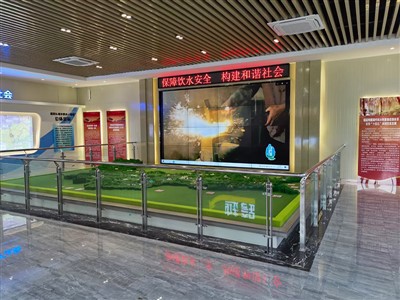
If your energy team is facing challenges with peak demand, unplanned downtime, renewable integration, or operating costs, we can work with you to build a customized industrial model that fits your specific needs. Reach out to our team to schedule a consultation, and let’s talk about how these models can help you operate more efficiently, reduce costs, and move toward a more sustainable energy future.
Industrial Model References
- International Energy Agency. (2023). Global Energy Sector Digitalization Report. OECD/IEA.
- U.S. Energy Information Administration. (2022). The Role of Advanced Modeling in Grid Modernization. EIA.
- IEEE Power and Energy Society. (2021). Industrial Applications of Energy Sector Modeling. IEEE Xplore.
- North American Electric Reliability Corporation. (2023). Maintaining Grid Reliability Through Predictive Modeling. NERC.
- International Renewable Energy Agency. (2022). Modeling Tools for Renewable Energy Integration. IRENA.
Guangzhou Zonco Culture and Media Co., Ltd.
Guangzhou Zonco Culture and Media Co., Ltd. is one of the most reliable industrial model manufacturers and suppliers in China, also supports customized service with low price. We warmly welcome you to wholesale cheap industrial model from our factory. For quotation, contact us now.
Address: Room C371, 402, Building 6, No.3 Xintang Street, Tianhe District, Guangzhou
E-mail: 13123180052@163.com
WebSite: https://www.scalemodellab.com/
