If you’ve ever placed an order for custom vacuum casting parts, you know how much goes into getting that final, precision-made component right: from selecting the right silicone mold material to tuning the casting resin, adjusting the vacuum pressure, and ensuring every detail matches your original design. The last thing any of us, as a vacuum casting service provider, want is for that hard work to go to waste because parts got damaged during storage before reaching your facility. Over the 12+ years I’ve run this operation, I’ve learned that proper storage isn’t just an afterthought—it’s a critical final step that preserves part quality, dimensional accuracy, and surface finish, even for batches of 100+ units. Vacuum Casting Services

Let me start with a common mistake I see new clients make: assuming that since vacuum casting parts are made from rigid or semi-rigid resins, they can be stacked on a pallet, tossed into a cardboard box, and forgotten for a week. It’s not that simple. Vacuum cast parts, especially those with thin walls, delicate undercuts, or sharp edges, are surprisingly fragile. A tiny dent from a careless move during storage can render a part unusable for aerospace, medical, or prototyping applications where even a 0.1mm deviation is unacceptable. Over the years, we’ve refined our storage process through trial and error, working with clients across automotive, consumer electronics, and medical device industries to solve specific part damage issues.
The first rule of our storage process is part segregation, and it starts the second a finished part exits the vacuum casting chamber. We sort parts immediately by resin type, complexity, and size, and we never stack parts without proper dividers. For example, medical-grade ABS parts we cast for a diagnostic device’s casing have 1.2mm thin side walls that flex easily under even minimal pressure. If we stacked these on top of each other, the upper parts would press into the lower ones, leaving permanent indentations that would fail FDA surface inspection. To avoid this, we use custom-cut, food-grade polyethylene dividers that fit exactly between parts, with precision notches that cradle each part’s unique shape without touching its functional surfaces. For undercuts, like those on a drone propeller mount, we add custom foam inserts that line the recessed areas, so the part’s protruding features don’t press against flat surfaces when stacked.
Next, we control environmental conditions from the moment parts enter our storage area. A lot of people don’t realize that most vacuum casting resins are hygroscopic—meaning they absorb moisture from the air over time. For parts made with polyamide or polyurethane resins (common for durable industrial prototypes), excess moisture can cause surface cracking, blistering, or a cloudy finish, which is impossible to fix without reworking the part. Our storage facility is climate-controlled, maintained at a constant 21°C (70°F) and 40% relative humidity, monitored 24/7 with calibrated digital hygrometers. We also avoid storing parts in areas near loading docks, windows, or other areas where temperatures fluctuate, as sudden temperature shifts can cause resin expansion and contraction, leading to dimensional distortion. For parts we cast from transparent resins for lens housings or display prototypes, we go a step further: we store them in UV-protective plastic bins. Even indirect sunlight from office windows can yellow transparent polyester resin over a few days, ruining a part’s optical clarity before it ever ships to a client.
Surface protection is another key step we’ve optimized for vacuum cast parts. Unlike injection-molded parts, which often have a uniform, smooth surface that can handle minor abrasion, vacuum cast parts often have detailed texture, fine graphics, or functional pads that can scratch easily if not protected. We learned this lesson the hard way a few years ago, when we shipped a batch of custom game controller prototypes that had subtle texturing on the grip sides. The cardboard inserts we used at the time had rough inner edges that left fine scratches across the texture, making the parts look cheap and unprofessional for our client’s trade show launch. Now, we use two types of protective packaging for finished parts: for large, flat panels or casings, we wrap each part in anti-static, low-lint polypropylene film that’s static-free to avoid attracting dust, and it’s gentle enough not to snag fine texture. For small, complex parts like connectors or gears, we place each part individually in ESD (electrostatic discharge) foam trays. ESD foam is critical for parts that will be used in electronic applications, as it prevents static buildup that could damage sensitive electronic components during assembly, and the soft cell structure avoids scratching fine surfaces.
Weight distribution is often overlooked, but it’s a major cause of damage in stacked batches. For example, we recently cast a batch of 80 custom automotive interior trim parts, each 30cm long and made from a semi-rigid polyurethane resin. When we stacked them on a standard pallet, the top 10 parts pressed down on the lower ones, causing the thin trim’s edges to bow slightly—enough that our client couldn’t mount them to their dashboard without noticeable gaps. After that incident, we implemented a weight-calculation step for every batch: we determine the maximum number of parts that can safely be stacked in a single column based on the part’s wall thickness, resin density, and shape. For large, heavy parts, we use shelving units with individual compartments instead of stacking, so no part supports more than its own weight. For small, lightweight parts, we limit stack height to 15 parts max, and we add a corrugated cardboard support layer every 5 parts to distribute weight evenly across the layer below.
Long-term storage, for clients who might request holding batches for 30+ days after casting, has its own set of rules. We rarely hold parts longer than 60 days, and for any part stored beyond 2 weeks, we perform a monthly quality check: we inspect 5% of the batch for surface damage, dimensional stability, and color consistency. For long-term storage, we place parts in sealed, airtight plastic bags with desiccant packs, which absorb excess moisture that would otherwise degrade the resin over time. We also add a small amount of static inhibitor to the airtight bags for parts that will be used in electronics, preventing dust buildup and static charge during extended storage. We never store long-term parts in open bins or on open shelves, as dust, humidity, and temperature shifts can cause irreversible damage.
A lot of suppliers cut corners on storage to save time and money, but as a small, family-run vacuum casting service, we know that attention to detail at every stage, including storage, is what keeps our clients coming back. Last year, we had a client who rushed a batch of medical device prototypes to us, needing parts for an urgent FDA audit. We cast the parts in 48 hours, and the audit was pushed back a week. Instead of having the parts shipped immediately, we stored them in our climate-controlled facility, and when they arrived at the client’s lab, they were in perfect condition, with no damage or quality issues. That’s the kind of reliability that makes clients trust you for repeat orders.
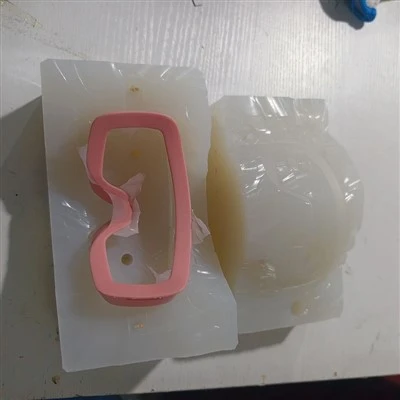
At the end of the day, vacuum cast parts are valuable—they represent weeks of design work, testing, and manufacturing, and they’re often critical to a client’s product launch or project timeline. Our storage process isn’t just a set of rules; it’s our way of honoring the trust our clients place in us to deliver parts that meet their exact specifications, from the first draft of the design to the moment the part is installed in their final product.
Precision CNC Machining If you’re working on a project that requires custom vacuum casting parts, whether it’s a prototype, small batch production run, or end-use components, we can help ensure your parts are stored and shipped in perfect condition. We work with clients across all industries, from startups developing new consumer products to established medical and automotive firms, and our team can tailor our storage process to fit your specific part requirements. To discuss your project, request a quote, or learn more about how we preserve the quality of vacuum cast parts, don’t hesitate to reach out to our team.
References
- Vacuum Casting: A Guide to Prototyping and Low-Volume Production. Society of Manufacturing Engineers, 2021.
- Environmental Storage Guidelines for Polymer Components. National Institute of Standards and Technology, 2020.
- Surface Protection for Cast Polymer Parts. Journal of Manufacturing Processes, Vol. 45, 2020, pp. 789-796.
- Hygroscopic Effects on Polyurethane Resin Components. Polymer Testing, Vol. 92, 2020, pp. 106845.
- Static Control for Electronic Components in Storage. Electrostatic Discharge Association, 2019.
Shenzhen Multi-Wins Precision Technology Co., Ltd.
As one of the most professional vacuum casting manufacturers and suppliers in China, we have world-leading production equipment and strong manufacturing capabilities. Please feel free to buy customized vacuum casting made in China here from our factory. Also, quotation is available.
Address: 1 Phase, Yi’an City Central Garden, Longfei Avenue, Longgang District, Shenzhen, GD, China. 518100
E-mail: info@multi-wins.com
WebSite: https://www.multi-wins.com/
